
Table of Contents
Qiyida X99‑D4 is a neat white mATX motherboard for LGA2011‑3 that first appeared for sale in 2023. Despite some shortcomings, the model proved successful and established itself in the budget segment. A later revision added support for TPM 2.0 modules.
X99‑D4 is one of the most common names among Chinese boards; many different models carry it. Carefully check the specifications and appearance of the specific board.
A similar‑looking but more advanced model — Soyo X99 D4.
Specifications
| Model | Qiyida X99 D4 |
|---|---|
| Socket | LGA 2011-3 |
| Chipset | C612 |
| Supported Processors | Intel Core i7 (5000, 6000 series, Haswell-E/Broadwell-E) Intel Xeon E5-1600 v3/v4, E5-2600 v3/v4, E5-4600 v3/v4 (Haswell-EP/Broadwell-EP) |
| VRM Configuration | 3 phase (6 virtual via doublers) Total MOSFETs: 12 (6 high-side + 6 low-side) |
| Supported Memory | 4 x DDR4 DIMM (dual-channel) with ECC and non-ECC support Maximum capacity: 128 GB |
| Sleep Mode (S3) Support | No |
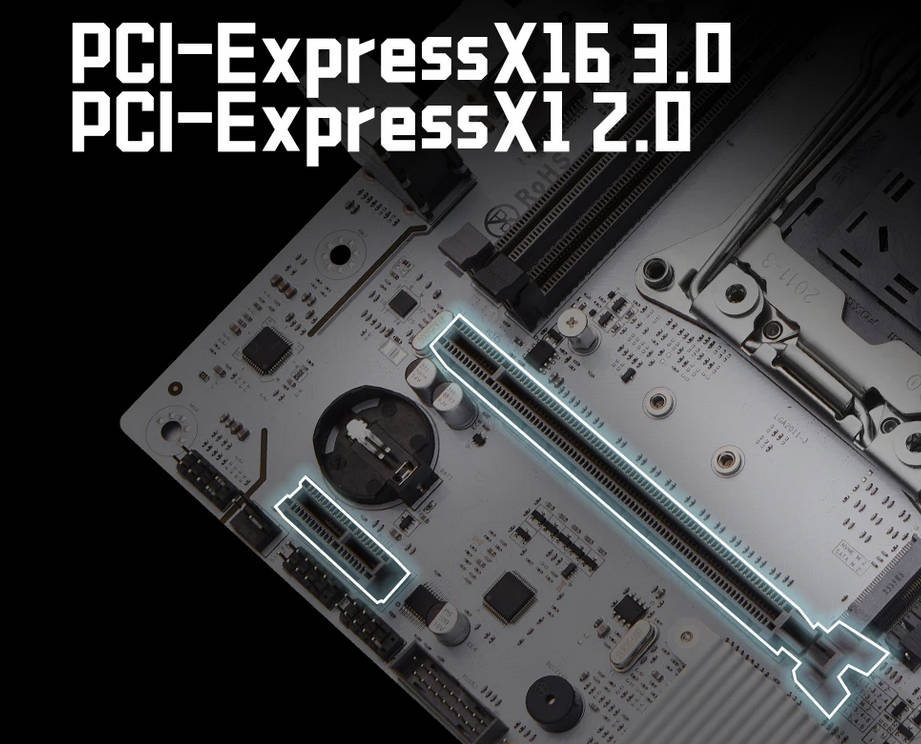
| Expansion Slots | 1 x PCI-e x16 (Gen 3.0) 1 x PCI-e x1 (Gen 2.0) |
| Storage | 4 x SATA 3.0 1 x M.2 (NGFF\NVME, Gen 3.0 x4) |
| Fan Connectors | 1 x CPU cooler (4pin) 1 x Case fan (3pin) |
| PS/2 Ports | 2 (mouse + keyboard) |
| USB 3.0 Ports | 2 (+ front panel support) |
| USB 2.0 Ports | 4 (+ front panel support) |
| Network | Gigabit LAN (RTL8111 \ RTL8168) |
| Audio | 5.1 channel (ALC897) |
| Bios Chip | W25Q128FV |
| JLPC header | Yes |
| TPM 2.0 header | LPC 14 Pin (depends on revision) |
| Extra | Active VRM cooling Built-in PC speaker |
| Form Factor & Dimensions | mATX 215 x 190 mm |
| Approximate Price | AliExpress: $45 - $55 (Check Price) |

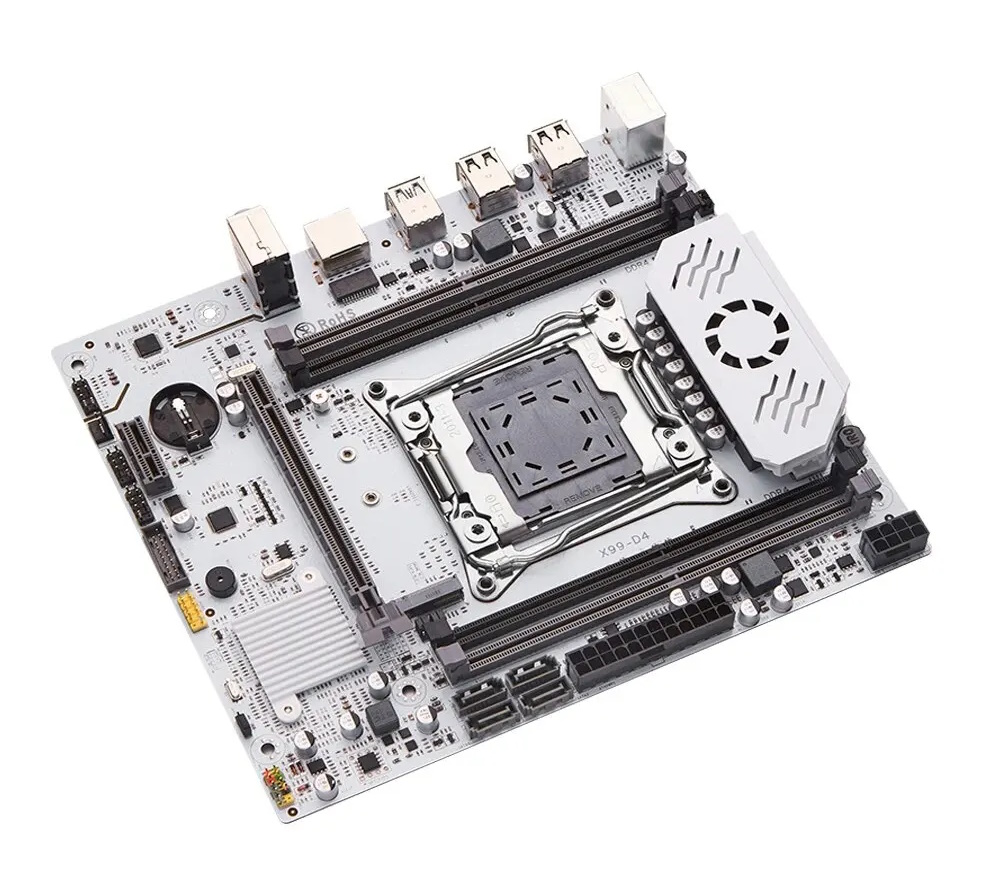

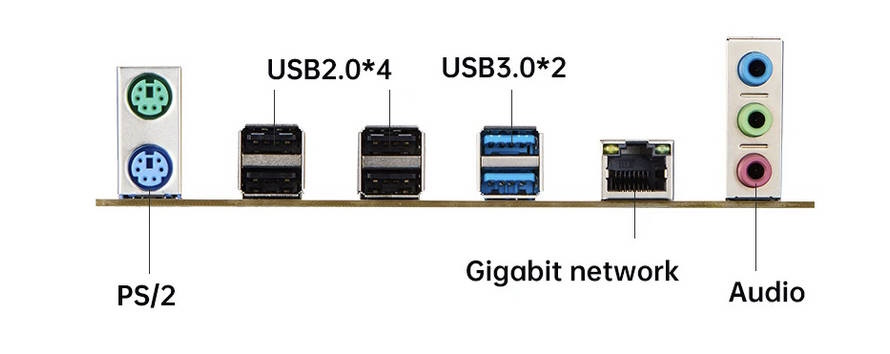
The board comes in white and looks very attractive, but some characteristics aren’t particularly well balanced.
It uses the server‑grade C612 chipset, which could provide a large number of modern I/O ports, but that potential is not fully realized here.
The storage subsystem consists of four SATA III ports and a single M.2 slot that can operate in either NVMe or SATA (NGFF) mode.

PCIe connectivity is also limited: just one full‑length x16 slot (Gen 3) and one x1 slot whose lanes come from the chipset (Gen 2). The large number of CPU PCIe lanes provided by Xeon E5 processors remains largely unused in this design.
One of the main features is active VRM cooling, implemented in the typical Chinese fashion: a small fan integrated into the heatsink, spinning at a fixed speed. Although the power delivery itself is the classic budget layout of three doubled phases (six “virtual” phases), the active cooling allows you to use mid‑range CPUs without much worry. While the manufacturer doesn’t specify a maximum TDP, we recommend sticking to models around 120–135 W.
Our sample is equipped with MOSFETs marked PQ PN0301 and PQ PN0302 (we were unable to find exact specifications). It employs uP1961S MOSFET drivers (x4) and a uP1649Q PWM controller. The same configuration is used in this vendor’s more expensive boards as well, for example the Qiyida X99 H9s.
The main drawback is the lack of S3 sleep (which is typical for inexpensive boards). You can also note the few fan headers and average audio without dedicated filtering capacitors.
Revisions
There are at least two revisions of the board: one without a TPM 2.0 header and one with it. Visually, both versions are almost identical, so be sure to confirm this detail before purchasing.

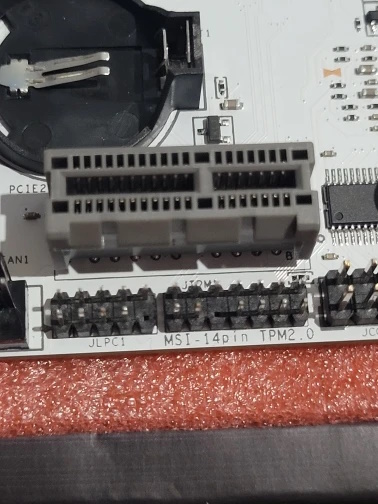
It’s still possible to connect TPM 2.0 modules to the first revision. The board has a JLPC header to which certain modules can be attached. This isn’t as convenient as on revisions with a native TPM 2.0 header, but it is possible. Read more in our guide to TPM 2.0 on Chinese LGA2011‑3 boards.
BIOS Capabilities

Qiyida X99‑D4 runs the typical firmware found on Chinese boards, based on Aptio V. The BIOS lacks a modern graphical interface and mouse control, but it includes nearly all the essentials. Out of the box, you can adjust memory timings; Resizable BAR (ReBAR), Secure Boot, and TPM 2.0 configuration are available. There’s no overclocking for unlocked‑multiplier CPUs, but that feature isn’t often needed on budget boards.
Simple BIOS Flashing Guide (Windows)
| BIOS version & date | Ram Timings | ReBAR | Unlocked CPU OC | Turbo Boost unlock | Undervolt | Secure Boot & TPM2.0 | Notes & Link |
|---|---|---|---|---|---|---|---|
| Ver:001 11/01/2023 | + | + | - | - | - | + | Stock BIOS [Download] |
| Ver:001 11/01/2023 | + | + | + | -50 mV | + | Stock BIOS + TBU (undervolt -50mV) [Download] |
- Download Intel Flash Programming Tool (FPTW) 9.1.10 from this page.
- Open Command Prompt as Administrator.
- Copy your BIOS file (
bios.binorbios.rom) into the same folder as FPTW. - In Command Prompt, navigate to the FPTW folder using the
cdcommand. - Back up first:
fptw64 -d backup.bin - Flash the BIOS:
fptw64 -f bios.bin
Notes: Replace bios.bin with the actual name of your BIOS file.
After flashing, we recommend resetting settings or clearing CMOS.
Frequently Asked Questions
Which memory slots are primary?
The gray slots (the ones farther from the CPU). The black slots are secondary and should be populated last.
The board won’t boot, black screen, etc. What should I do?
See our article about the most common LGA2011‑3 issues.
Is Turbo Boost Unlock possible on this board?
Yes, you can perform the unlock yourself using S3TurboTool by following our guide, or wait for the appearance of a ready-made BIOS with unlock.
Where can I find drivers for this board?
The page with current drivers for socket 2011‑3 boards is located here.
Where is the BIOS chip located?
To the right of the chipset heatsink.
Conclusion
OldRigRevive Review
5.0
3.8
4.0
4.0

Written by
Senior Hardware Specialist proving you don't need top-tier gear to game. Expert in smart upgrades and budget-friendly PC restoration.