Table of Contents
LGA1151 (also known as Socket H4) debuted in 2015 as the successor to LGA1150 and became one of Intel’s most successful and longest‑lived sockets. Over its five‑year lifespan, it spanned all popular processor lineups — from budget Celerons to flagship Core i9s.
Unlike most previous sockets, LGA1151 has two hardware‑incompatible versions (often referred to as v1 and v2). While both revisions share the same pin count and layout, they differ electrically: the first version supports 6th and 7th gen (Skylake and Kaby Lake), while the second supports 8th and 9th gen (Coffee Lake and Coffee Lake Refresh).
This article details LGA1151’s features, the architectures it supports, and provides a comprehensive list of every processor released for this socket — including engineering samples, server models, “mutant” CPUs, and chips never intended for retail sale.
LGA1151 Processor Architectures and Features
Skylake
In August 2015, Intel introduced the first 6th‑gen processors based on the Skylake architecture, marking the transition to a new platform with DDR4 support.
Key architectural features:
- Process node: 14 nm
- Improved core architecture with ~6% IPC uplift over Broadwell
- Memory controller supporting DDR4‑2133 and DDR3L‑1600 (some boards also enabled standard DDR3 @ 1.5 V — unofficial and risky)
- DMI 3.0 interface (up to ~3.9 GB/s in each direction)
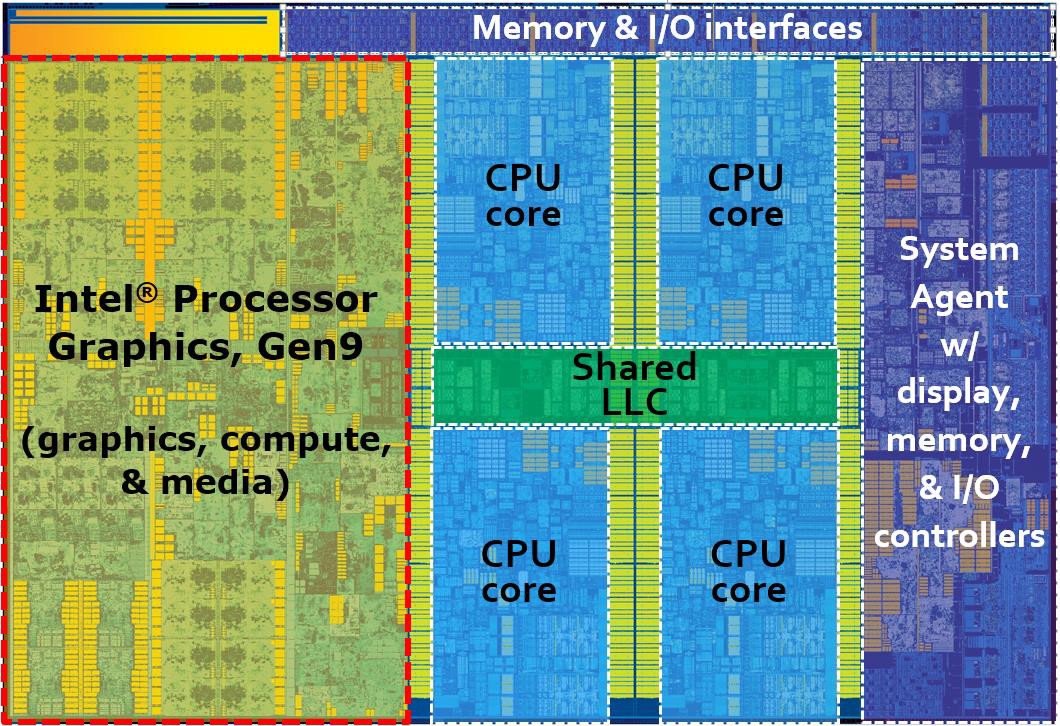
- Gen9 graphics with DirectX 12, OpenGL 4.4, OpenCL 2.0, HEVC decode, and 4K@60 Hz output
- Support for Thunderbolt 3 (via external controller) and SATA Express
- Speed Shift replaces SpeedStep, improving responsiveness to load changes
Skylake became Intel’s longest‑running core design since Pentium 4 — with modest refinements, it underpinned every generation up to Alder Lake. A notable downside was the TIM under the heatspreader: higher clocks on unlocked chips often required delidding for better thermals.
Kaby Lake
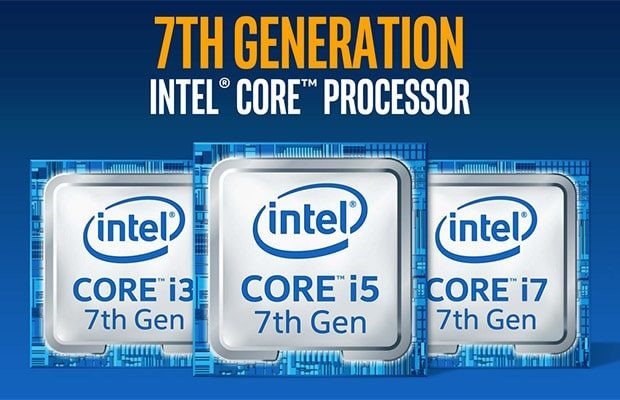
7th‑gen Kaby Lake launched in January 2017. Breaking from the classic “tick‑tock,” it brought no major architectural changes, but process improvements enabled higher clocks and slightly lower power.
Key Kaby Lake features:
- Process node: 14 nm+ (refined)
- IPC essentially unchanged from Skylake; higher base/boost clocks
- Integrated graphics with hardware HEVC (H.265) 10‑bit and VP9 8/10‑bit decode
- Support for HDR and HDCP 2.2
- Speed Shift v2 — faster response and improved adaptive frequency
- Support for DDR4‑2400 and Intel Optane (3D XPoint); limited DDR3L‑1600 support on select boards/chipsets (board‑dependent and often unofficial)
- Turbo Boost 2.0, with max clocks up to 4.5 GHz on the i7‑7700K
Kaby Lake was a successful refresh. Highlights included the i7‑7700K and the first unlocked Core i3 (i3‑7350K), while Hyper‑Threading reached the Pentium G4560 — a budget favorite. The thermal interface under the IHS remained the same, and high clocks still benefited from delidding.
Coffee Lake
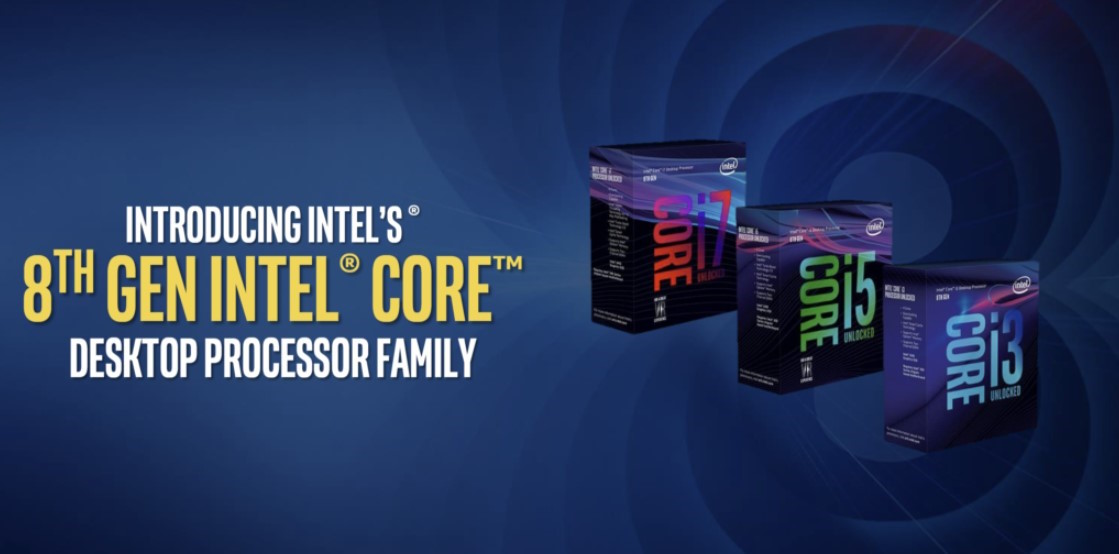
8th‑gen Coffee Lake arrived in fall 2017. For the first time in years, Intel increased core counts in the consumer segment — a direct response to AMD Ryzen.
Key features:
- Process node: 14 nm++ (further optimized), enabling higher clocks and slightly lower power
- Higher core counts across the lineup, plus more L3 cache
- Memory controller: official support for DDR4‑2666; DDR3L/DDR3 can work on certain boards (e.g., H310C or modded H110/200), but remains unofficial and risky — if attempted, use only 1.35 V DDR3L
- Gen9.5 graphics with HDR10 support, HEVC 10‑bit encode, and VP9 optimizations
Coffee Lake marked a turning point: i7 became 6C/12T, i5 6C/6T, and i3 a true 4‑core. The boost was significant and competitive with Ryzen. The trade‑off was incompatibility with 100/200‑series chipsets. Intel cited power delivery requirements; enthusiasts later found ways to run Coffee Lake on older boards. TIM under the IHS still limited thermal headroom on flagship overclocks.
Coffee Lake Refresh
9th‑gen processors arrived in Q4 2018 as the final evolution of LGA1151. The architecture remained Coffee Lake with important refinements and record‑setting specs.
Key features:
- Process node: highly optimized 14 nm+++
- Higher core counts: up to 8C/16T for Core i9; up to 16 MB L3
- First appearance of the Core i9 lineup
- Hyper‑Threading disabled on Core i7/i5/i3 for clearer segmentation (HT retained on i9)
- Partial in‑silicon mitigations for Meltdown/Spectre
- Introduction of new technologies:
- Favored Core — prioritizes the best core
- All‑Core Turbo — more aggressive multi‑core boost
- Thermal Velocity Boost — extra boost when thermals allow (i9‑9900K/KS)
- Support for up to 128 GB DDR4 on Core i9/i7/i5
- Return of solder under the IHS (STIM) for K‑series, greatly improving OC thermals
Coffee Lake Refresh marked the final chapter of the LGA1151 era. Beyond 5 GHz clocks and the i9 branding, F/KF models without iGPU became common. Despite their age, 9th‑gen flagships remain capable today.
Intel Processor Naming
Model names may include suffixes (e.g., Core i7‑8700K). Common suffixes:
- K — unlocked multiplier
- P — iGPU disabled
- S — power‑optimized (lower clocks than non‑suffix)
- T — ultra power‑efficient (significantly lower clocks)
- E — embedded variant available
- F — no integrated graphics
You can also infer the architecture from the model number:
- Skylake — starts with 6 (Core i5‑6600, Core i3‑6300, …)
- Kaby Lake — starts with 7 (Core i5‑7500, Core i3‑7100, …)
- Coffee Lake — starts with 8 (Core i7‑8700, Core i3‑8300, …)
- Coffee Lake Refresh — starts with 9 (Core i7‑9700, Core i3‑9100, …)
All Socket 1151 Processors and Their Specifications
Retail Desktop
Skylake
| Model | Cores \ Threads | Base Frequency \ Max Turbo Frequency | L3 Cache | Graphics | Multiplier | TDP | Memory support |
|---|---|---|---|---|---|---|---|
| Core i7-6700K | 4 \ 8 | 4,0 \ 4,2 GHz | 8 MB | HD 530 | Unlocked | 91 W | DDR4-2133, DDR3L-1600 |
| Core i7-6700 | 4 \ 8 | 3,4 \ 4,0 GHz | 8 MB | HD 530 | Locked | 65 W | DDR4-2133, DDR3L-1600 |
| Core i7-6700T | 4 \ 8 | 2,8 \ 3,6 GHz | 8 MB | HD 530 | Locked | 35 W | DDR4-2133, DDR3L-1600 |
| Core i7-6700TE | 4 \ 8 | 2,4 \ 3,4 GHz | 8 MB | HD 530 | Locked | 35 W | DDR4-2133, DDR3L-1600 |
| Core i5-6600K | 4 \ 4 | 3,5 \ 3,9 GHz | 6 MB | HD 530 | Unlocked | 91 W | DDR4-2133, DDR3L-1600 |
| Core i5-6600 | 4 \ 4 | 3,3 \ 3,9 GHz | 6 MB | HD 530 | Locked | 65 W | DDR4-2133, DDR3L-1600 |
| Core i5-6600T | 4 \ 4 | 2,7 \ 3,5 GHz | 6 MB | HD 530 | Locked | 35 W | DDR4-2133, DDR3L-1600 |
| Core i5-6500 | 4 \ 4 | 3,2 \ 3,6 GHz | 6 MB | HD 530 | Locked | 65 W | DDR4-2133, DDR3L-1600 |
| Core i5-6500T | 4 \ 4 | 2,5 \ 3,1 GHz | 6 MB | HD 530 | Locked | 35 W | DDR4-2133, DDR3L-1600 |
| Core i5-6500TE | 4 \ 4 | 2,3 \ 3,3 GHz | 6 MB | HD 530 | Locked | 35 W | DDR4-2133, DDR3L-1600 |
| Core i5-6402P | 4 \ 4 | 2,8 \ 3,4 GHz | 6 MB | HD 510 | Locked | 65 W | DDR4-2133, DDR3L-1600 |
| Core i5-6400 | 4 \ 4 | 2,7 \ 3,3 GHz | 6 MB | HD 530 | Locked | 65 W | DDR4-2133, DDR3L-1600 |
| Core i5-6400T | 4 \ 4 | 2,2 \ 2,8 GHz | 6 MB | HD 530 | Locked | 35 W | DDR4-2133, DDR3L-1600 |
| Core i3-6320 | 2 \ 4 | 3,9 GHz | 4 MB | HD 530 | Locked | 51 W | DDR4-2133, DDR3L-1600 |
| Core i3-6300 | 2 \ 4 | 3,8 GHz | 4 MB | HD 530 | Locked | 51 W | DDR4-2133, DDR3L-1600 |
| Core i3-6300T | 2 \ 4 | 3,3 GHz | 4 MB | HD 530 | Locked | 35 W | DDR4-2133, DDR3L-1600 |
| Core i3-6100 | 2 \ 4 | 3,7 GHz | 3 MB | HD 530 | Locked | 51 W | DDR4-2133, DDR3L-1600 |
| Core i3-6100T | 2 \ 4 | 3,2 GHz | 3 MB | HD 530 | Locked | 35 W | DDR4-2133, DDR3L-1600 |
| Core i3-6100TE | 2 \ 4 | 2,7 GHz | 4 MB | HD 530 | Locked | 35 W | DDR4-2133, DDR3L-1600 |
| Core i3-6098P | 2 \ 4 | 3,6 GHz | 3 MB | HD 510 | Locked | 54 W | DDR4-2133, DDR3L-1600 |
| Pentium G4520 | 2 \ 2 | 3,6 GHz | 3 MB | HD 530 | Locked | 51 W | DDR4-2133, DDR3L-1600 |
| Pentium G4500 | 2 \ 2 | 3,5 GHz | 3 MB | HD 530 | Locked | 51 W | DDR4-2133, DDR3L-1600 |
| Pentium G4500T | 2 \ 2 | 3,0 GHz | 3 MB | HD 530 | Locked | 35 W | DDR4-2133, DDR3L-1600 |
| Pentium G4400 | 2 \ 2 | 3,3 GHz | 3 MB | HD 510 | Locked | 54 W | DDR4-2133, DDR3L-1600 |
| Pentium G4400T | 2 \ 2 | 2,9 GHz | 3 MB | HD 510 | Locked | 35 W | DDR4-2133, DDR3L-1600 |
| Pentium G4400TE | 2 \ 2 | 3,3 GHz | 3 MB | HD 510 | Locked | 54 W | DDR4-2133, DDR3L-1600 |
| Celeron G3920 | 2 \ 2 | 2,9 GHz | 2 MB | HD 510 | Locked | 51 W | DDR4-2133, DDR3L-1600 |
| Celeron G3900 | 2 \ 2 | 2,8 GHz | 2 MB | HD 510 | Locked | 51 W | DDR4-2133, DDR3L-1600 |
| Celeron G3900TE | 2 \ 2 | 2,8 GHz | 2 MB | HD 510 | Locked | 51 W | DDR4-2133, DDR3L-1600 |
| Celeron G3900T | 2 \ 2 | 2,6 GHz | 2 MB | HD 510 | Locked | 35 W | DDR4-2133, DDR3L-1600 |
Kaby Lake
| Model | Cores \ Threads | Base Frequency \ Max Turbo Frequency | L3 Cache | Graphics | Multiplier | TDP | Memory support |
|---|---|---|---|---|---|---|---|
| Core i7-7700K | 4 \ 8 | 4,2 \ 4,5 GHz | 8 MB | UHD 630 | Unlocked | 93 W | DDR4-2400, DDR3L-1600 |
| Core i7-7700 | 4 \ 8 | 3,6 \ 4,2 GHz | 8 MB | UHD 630 | Locked | 65 W | DDR4-2400, DDR3L-1600 |
| Core i7-7700T | 4 \ 8 | 2,9 \ 3,8 GHz | 8 MB | UHD 630 | Locked | 35 W | DDR4-2400, DDR3L-1600 |
| Core i5-7600K | 4 \ 4 | 3,8 \ 4,2 GHz | 6 MB | UHD 630 | Unlocked | 91 W | DDR4-2400, DDR3L-1600 |
| Core i5-7600 | 4 \ 4 | 3,5 \ 4,1 GHz | 6 MB | UHD 630 | Locked | 65 W | DDR4-2400, DDR3L-1600 |
| Core i5-7600T | 4 \ 4 | 2,8 \ 3,7 GHz | 6 MB | UHD 630 | Locked | 35 W | DDR4-2400, DDR3L-1600 |
| Core i5-7500 | 4 \ 4 | 3,4 \ 3,8 GHz | 6 MB | UHD 630 | Locked | 65 W | DDR4-2400, DDR3L-1600 |
| Core i5-7500T | 4 \ 4 | 2,7 \ 3,3 GHz | 6 MB | UHD 630 | Locked | 35 W | DDR4-2400, DDR3L-1600 |
| Core i5-7400 | 4 \ 4 | 3,0 \ 3,5 GHz | 6 MB | UHD 630 | Locked | 65 W | DDR4-2400, DDR3L-1600 |
| Core i5-7400T | 4 \ 4 | 2,4 \ 3,0 GHz | 6 MB | UHD 630 | Locked | 35 W | DDR4-2400, DDR3L-1600 |
| Core i3-7350K | 2 \ 4 | 4,2 GHz | 4 MB | UHD 630 | Unlocked | 60 W | DDR4-2400, DDR3L-1600 |
| Core i3-7320 | 2 \ 4 | 4,1 GHz | 4 MB | UHD 630 | Locked | 51 W | DDR4-2400, DDR3L-1600 |
| Core i3-7300 | 2 \ 4 | 4,0 GHz | 4 MB | UHD 630 | Locked | 51 W | DDR4-2400, DDR3L-1600 |
| Core i3-7300T | 2 \ 4 | 3,5 GHz | 4 MB | UHD 630 | Locked | 35 W | DDR4-2400, DDR3L-1600 |
| Core i3-7101E | 2 \ 4 | 3,9 GHz | 3 MB | UHD 630 | Locked | 54 W | DDR4-2400, DDR3L-1600 |
| Core i3-7101TE | 2 \ 4 | 3,4 GHz | 3 MB | UHD 630 | Locked | 35 W | DDR4-2400, DDR3L-1600 |
| Core i3-7100 | 2 \ 4 | 3,9 GHz | 3 MB | UHD 630 | Locked | 51 W | DDR4-2400, DDR3L-1600 |
| Core i3-7100T | 2 \ 4 | 3,4 GHz | 3 MB | UHD 630 | Locked | 35 W | DDR4-2400, DDR3L-1600 |
| Pentium G4620 | 2 \ 4 | 3,7 GHz | 3 MB | UHD 630 | Locked | 51 W | DDR4-2400, DDR3L-1600 |
| Pentium G4600 | 2 \ 4 | 3,6 GHz | 3 MB | UHD 630 | Locked | 51 W | DDR4-2400, DDR3L-1600 |
| Pentium G4600T | 2 \ 4 | 3,0 GHz | 3 MB | UHD 630 | Locked | 35 W | DDR4-2400, DDR3L-1600 |
| Pentium G4560 | 2 \ 4 | 3,5 GHz | 3 MB | UHD 610 | Locked | 54 W | DDR4-2400, DDR3L-1600 |
| Pentium G4560T | 2 \ 4 | 2,9 GHz | 3 MB | UHD 610 | Locked | 35 W | DDR4-2400, DDR3L-1600 |
| Celeron G3950 | 2 \ 2 | 3,0 GHz | 2 MB | UHD 610 | Locked | 51 W | DDR4-2133, DDR3L-1600 |
| Celeron G3930 | 2 \ 2 | 2,9 GHz | 2 MB | UHD 610 | Locked | 51 W | DDR4-2133, DDR3L-1600 |
| Celeron G3930T | 2 \ 2 | 2,7 GHz | 2 MB | UHD 610 | Locked | 35 W | DDR4-2133, DDR3L-1600 |
| Celeron G3930TE | 2 \ 2 | 2,7 GHz | 2 MB | UHD 610 | Locked | 51 W | DDR4-2133, DDR3L-1600 |
Coffee Lake
| Model | Cores \ Threads | Base Frequency \ Max Turbo Frequency | L3 Cache | Graphics | Multiplier | TDP | Memory support |
|---|---|---|---|---|---|---|---|
| Core i7-8700K | 6 \ 12 | 3,7 \ 4,7 GHz | 12 MB | UHD 630 | Unlocked | 95 W | DDR4-2666 |
| Core i7-8700 | 6 \ 12 | 3,2 \ 4,6 GHz | 12 MB | UHD 630 | Locked | 65 W | DDR4-2666 |
| Core i7-8700T | 6 \ 12 | 2,4 \ 4,0 GHz | 12 MB | UHD 630 | Locked | 35 W | DDR4-2666 |
| Core i7-8086K | 6 \ 12 | 4,0 \ 5,0 GHz | 12 MB | UHD 630 | Unlocked | 95 W | DDR4-2666 |
| Core i5-8600K | 6 \ 6 | 3,6 \ 4,3 GHz | 9 MB | UHD 630 | Unlocked | 95 W | DDR4-2666 |
| Core i5-8600 | 6 \ 6 | 3,1 \ 4,3 GHz | 9 MB | UHD 630 | Locked | 65 W | DDR4-2666 |
| Core i5-8600T | 6 \ 6 | 2,3 \ 3,7 GHz | 9 MB | UHD 630 | Locked | 35 W | DDR4-2666 |
| Core i5-8500 | 6 \ 6 | 3,0 \ 4,1 GHz | 9 MB | UHD 630 | Locked | 65 W | DDR4-2666 |
| Core i5-8500T | 6 \ 6 | 2,1 \ 3,5 GHz | 9 MB | UHD 630 | Locked | 35 W | DDR4-2666 |
| Core i5-8400 | 6 \ 6 | 2,8 \ 4,0 GHz | 9 MB | UHD 630 | Locked | 65 W | DDR4-2666 |
| Core i5-8400T | 6 \ 6 | 1,7 \ 3,3 GHz | 9 MB | UHD 630 | Locked | 35 W | DDR4-2666 |
| Core i3-8350K | 4 \ 4 | 4,0 GHz | 8 MB | UHD 630 | Unlocked | 91 W | DDR4-2400 |
| Core i3-8300 | 4 \ 4 | 3,7 GHz | 8 MB | UHD 630 | Locked | 62 W | DDR4-2400 |
| Core i3-8300T | 4 \ 4 | 3,2 GHz | 8 MB | UHD 630 | Locked | 35 W | DDR4-2400 |
| Core i3-8100 | 4 \ 4 | 3,6 GHz | 6 MB | UHD 630 | Locked | 65 W | DDR4-2400 |
| Core i3-8100T | 4 \ 4 | 3,1 GHz | 6 MB | UHD 630 | Locked | 35 W | DDR4-2400 |
| Pentium Gold G5600F | 2 \ 4 | 3,9 GHz | 4 MB | - | Locked | 54 W | DDR4-2400 |
| Pentium Gold G5600 | 2 \ 4 | 3,9 GHz | 4 MB | UHD 630 | Locked | 54 W | DDR4-2400 |
| Pentium Gold G5500 | 2 \ 4 | 3,8 GHz | 4 MB | UHD 630 | Locked | 54 W | DDR4-2400 |
| Pentium Gold G5420 | 2 \ 4 | 3,8 GHz | 4 MB | UHD 610 | Locked | 54 W | DDR4-2400 |
| Pentium Gold G5420T | 2 \ 4 | 3,2 GHz | 4 MB | UHD 610 | Locked | 35 W | DDR4-2400 |
| Pentium Gold G5400 | 2 \ 4 | 3,7 GHz | 4 MB | UHD 610 | Locked | 58 W | DDR4-2400 |
| Pentium Gold G5400T | 2 \ 4 | 3,1 GHz | 4 MB | UHD 610 | Locked | 35 W | DDR4-2400 |
| Pentium G5500T | 2 \ 4 | 3,2 GHz | 4 MB | UHD 630 | Locked | 35 W | DDR4-2400 |
| Celeron G4950 | 2 \ 2 | 3,3 GHz | 2 MB | UHD 610 | Locked | 54 W | DDR4-2400 |
| Celeron G4930 | 2 \ 2 | 3,2 GHz | 2 MB | UHD 610 | Locked | 54 W | DDR4-2400 |
| Celeron G4930T | 2 \ 2 | 3,0 GHz | 2 MB | UHD 610 | Locked | 35 W | DDR4-2400 |
| Celeron G4920 | 2 \ 2 | 3,2 GHz | 2 MB | UHD 610 | Locked | 54 W | DDR4-2400 |
| Celeron G4900 | 2 \ 2 | 3,1 GHz | 2 MB | UHD 610 | Locked | 54 W | DDR4-2400 |
| Celeron G4900T | 2 \ 2 | 2,9 GHz | 2 MB | UHD 610 | Locked | 35 W | DDR4-2400 |
Coffee Lake Refresh
| Model | Cores \ Threads | Base Frequency \ Max Turbo Frequency | L3 Cache | Graphics | Multiplier | TDP | Memory support |
|---|---|---|---|---|---|---|---|
| Core i9-9900KS | 8 \ 16 | 4,0 \ 5,0 GHz | 16 MB | UHD 630 | Unlocked | 127 W | DDR4-2666 |
| Core i9-9900K | 8 \ 16 | 3,6 \ 5,0 GHz | 16 MB | UHD 630 | Unlocked | 95 W | DDR4-2666 |
| Core i9-9900KF | 8 \ 16 | 3,6 \ 5,0 GHz | 16 MB | - | Unlocked | 95 W | DDR4-2666 |
| Core i9-9900 | 8 \ 16 | 3,1 \ 5,0 GHz | 16 MB | UHD 630 | Locked | 65 W | DDR4-2666 |
| Core i9-9900T | 8 \ 16 | 2,1 \ 4,4 GHz | 16 MB | UHD 630 | Locked | 35 W | DDR4-2666 |
| Core i7-9700K | 8 \ 8 | 3,6 \ 4,9 GHz | 12 MB | UHD 630 | Unlocked | 95 W | DDR4-2666 |
| Core i7-9700KF | 8 \ 8 | 3,6 \ 4,9 GHz | 12 MB | - | Unlocked | 95 W | DDR4-2666 |
| Core i7-9700F | 8 \ 8 | 3,0 \ 4,7 GHz | 12 MB | - | Locked | 65 W | DDR4-2666 |
| Core i7-9700T | 8 \ 8 | 2,0 \ 4,3 GHz | 12 MB | UHD 630 | Locked | 35 W | DDR4-2666 |
| Core i7-9700 | 8 \ 8 | 3,0 \ 4,7 GHz | 12 MB | UHD 630 | Locked | 65 W | DDR4-2666 |
| Core i5-9600K | 6 \ 6 | 3,7 \ 4,6 GHz | 9 MB | UHD 630 | Unlocked | 95 W | DDR4-2666 |
| Core i5-9600KF | 6 \ 6 | 3,7 \ 4,6 GHz | 9 MB | - | Unlocked | 95 W | DDR4-2666 |
| Core i5-9600T | 6 \ 6 | 2,3 \ 3,9 GHz | 9 MB | UHD 630 | Locked | 35 W | DDR4-2666 |
| Core i5-9500 | 6 \ 6 | 3,0 \ 4,4 GHz | 9 MB | UHD 630 | Locked | 65 W | DDR4-2666 |
| Core i5-9500F | 6 \ 6 | 3,0 \ 4,4 GHz | 9 MB | - | Locked | 65 W | DDR4-2666 |
| Core i5-9500T | 6 \ 6 | 2,2 \ 3,7 GHz | 9 MB | UHD 630 | Locked | 35 W | DDR4-2666 |
| Core i5-9400F | 6 \ 6 | 2,9 \ 4,1 GHz | 9 MB | - | Locked | 65 W | DDR4-2666 |
| Core i5-9400 | 6 \ 6 | 2,9 \ 4,1 GHz | 9 MB | UHD 630 | Locked | 65 W | DDR4-2666 |
| Core i5-9400T | 6 \ 6 | 1,8 \ 3,4 GHz | 9 MB | UHD 630 | Locked | 35 W | DDR4-2666 |
| Core i3-9350K | 4 \ 4 | 4,0 \ 4,6 GHz | 8 MB | UHD 630 | Unlocked | 91 W | DDR4-2400 |
| Core i3-9350KF | 4 \ 4 | 4,0 \ 4,6 GHz | 8 MB | - | Unlocked | 91 W | DDR4-2400 |
| Core i3-9320 | 4 \ 4 | 3,7 \ 4,4 GHz | 8 MB | UHD 630 | Locked | 62 W | DDR4-2400 |
| Core i3-9300 | 4 \ 4 | 3,7 \ 4,3 GHz | 8 MB | UHD 630 | Locked | 62 W | DDR4-2400 |
| Core i3-9300T | 4 \ 4 | 3,2 \ 3,8 GHz | 8 MB | UHD 630 | Locked | 35 W | DDR4-2400 |
| Core i3-9100 | 4 \ 4 | 3,6 \ 4,2 GHz | 6 MB | UHD 630 | Locked | 65 W | DDR4-2400 |
| Core i3-9100F | 4 \ 4 | 3,6 \ 4,2 GHz | 6 MB | - | Locked | 65 W | DDR4-2400 |
| Core i3-9100T | 4 \ 4 | 3,1 \ 3,7 GHz | 6 MB | UHD 630 | Locked | 35 W | DDR4-2400 |
Server Solutions
Xeon E3‑1200 v5
Xeon E3‑1200 v5 — server lineup based on Skylake, released alongside 6th‑gen desktop processors. Designed for motherboards with C236/C232 chipsets, providing ECC support and enterprise features. Key differences versus Core: ECC DDR4 support, Intel vPro, and TXT (Trusted Execution Technology).
Learn more about the Xeon E3‑1200 v5/v6 lineups — and how to run them on standard desktop motherboards — in this article.
| Model | Cores \ Threads | Base Frequency \ Max Turbo Frequency | L3 Cache | Graphics | TDP | Memory support |
|---|---|---|---|---|---|---|
| Xeon E3-1280 v5 | 4 \ 8 | 3,7 \ 4,0 GHz | 8 MB | - | 80 W | DDR4-2133, DDR3L-1600 |
| Xeon E3-1275 v5 | 4 \ 8 | 3,6 \ 4,0 GHz | 8 MB | HD P530 | 80 W | DDR4-2133, DDR3L-1600 |
| Xeon E3-1270 v5 | 4 \ 8 | 3,6 \ 4,0 GHz | 8 MB | - | 80 W | DDR4-2133, DDR3L-1600 |
| Xeon E3-1268L v5 | 4 \ 8 | 2,4 \ 3,4 GHz | 8 MB | HD P530 | 35 W | DDR4-2133, DDR3L-1600 |
| Xeon E3-1260L v5 | 4 \ 8 | 2,9 \ 3,9 GHz | 8 MB | - | 45 W | DDR4-2133, DDR3L-1600 |
| Xeon E3-1245 v5 | 4 \ 8 | 3,5 \ 3,9 GHz | 8 MB | HD P530 | 80 W | DDR4-2133, DDR3L-1600 |
| Xeon E3-1240 v5 | 4 \ 8 | 3,5 \ 3,9 GHz | 8 MB | - | 80 W | DDR4-2133, DDR3L-1600 |
| Xeon E3-1240L v5 | 4 \ 8 | 2,1 \ 3,2 GHz | 8 MB | - | 25 W | DDR4-2133, DDR3L-1600 |
| Xeon E3-1235L v5 | 4 \ 4 | 2,0 \ 3,0 GHz | 8 MB | HD P530 | 25 W | DDR4-2133, DDR3L-1600 |
| Xeon E3-1230 v5 | 4 \ 8 | 3,4 \ 3,8 GHz | 8 MB | - | 80 W | DDR4-2133, DDR3L-1600 |
| Xeon E3-1225 v5 | 4 \ 4 | 3,3 \ 3,7 GHz | 8 MB | HD P530 | 80 W | DDR4-2133, DDR3L-1600 |
| Xeon E3-1220 v5 | 4 \ 4 | 3,0 \ 3,5 GHz | 8 MB | - | 80 W | DDR4-2133, DDR3L-1600 |
Xeon E3‑1200 v6
A Kaby Lake‑based refresh of E3‑1200 v5, also targeting C236/C232 platforms. Differences versus Core remain: ECC DDR4, vPro, TXT.
| Model | Cores \ Threads | Base Frequency \ Max Turbo Frequency | L3 Cache | Graphics | TDP | Memory support |
|---|---|---|---|---|---|---|
| Xeon E3-1285 v6 | 4 \ 8 | 4,1 \ 4,5 GHz | 8 MB | UHD P630 | 79 W | DDR4-2400, DDR3L-1866 |
| Xeon E3-1280 v6 | 4 \ 8 | 3,9 \ 4,2 GHz | 8 MB | - | 72 W | DDR4-2400, DDR3L-1866 |
| Xeon E3-1275 v6 | 4 \ 8 | 3,8 \ 4,2 GHz | 8 MB | UHD P630 | 73 W | DDR4_2400, DDR3L-1866 |
| Xeon E3-1270 v6 | 4 \ 8 | 3,8 \ 4,2 GHz | 8 MB | - | 72 W | DDR4-2400, DDR3L-1866 |
| Xeon E3-1245 v6 | 4 \ 8 | 3,7 \ 4,1 GHz | 8 MB | UHD P630 | 73 W | DDR4-2400, DDR3L-1866 |
| Xeon E3-1240 v6 | 4 \ 8 | 3,7 \ 4,1 GHz | 8 MB | - | 72 W | DDR4-2400, DDR3L-1866 |
| Xeon E3-1230 v6 | 4 \ 8 | 3,5 \ 3,9 GHz | 8 MB | - | 72 W | DDR4-2400, DDR3L-1866 |
| Xeon E3-1225 v6 | 4 \ 4 | 3,3 \ 3,7 GHz | 8 MB | UHD P630 | 73 W | DDR4-2400, DDR3L-1866 |
| Xeon E3-1220 v6 | 4 \ 4 | 3,0 \ 3,5 GHz | 8 MB | - | 72 W | DDR4-2400, DDR3L-1866 |
Xeon E‑2100
Xeon E‑2100 — Coffee Lake‑based successor to E3‑1200 v6 (Q3 2018). Designed for LGA1151 v2 motherboards with C242/C246 chipsets. Compared to consumer Coffee Lake: ECC support, Intel vPro, enhanced virtualization, and platform features aimed at reliability/availability.
| Model | Cores \ Threads | Base Frequency \ Max Turbo Frequency | L3 Cache | Graphics | Multiplier | TDP | Memory support |
|---|---|---|---|---|---|---|---|
| Xeon E-2186G | 6 \ 12 | 3,8 \ 4,7 GHz | 12 MB | UHD P630 | Locked | 95 W | DDR4-2666 |
| Xeon E-2176G | 6 \ 12 | 3,7 \ 4,7 GHz | 12 MB | UHD P630 | Locked | 80 W | DDR4-2666 |
| Xeon E-2174G | 4 \ 8 | 3,8 \ 4,7 GHz | 8 MB | UHD P630 | Locked | 71 W | DDR4-2666 |
| Xeon E-2146G | 6 \ 12 | 3,5 \ 4,5 GHz | 12 MB | UHD P630 | Locked | 80 W | DDR4-2666 |
| Xeon E-2144G | 4 \ 8 | 3,6 \ 4,5 GHz | 8 MB | UHD P630 | Locked | 71 W | DDR4-2666 |
| Xeon E-2136 | 6 \ 12 | 3,3 \ 4,5 GHz | 12 MB | - | Locked | 80 W | DDR4-2666 |
| Xeon E-2134 | 4 \ 8 | 3,5 \ 4,5 GHz | 8 MB | - | Locked | 71 W | DDR4-2666 |
| Xeon E-2126G | 6 \ 6 | 3,3 \ 4,5 GHz | 12 MB | UHD P630 | Locked | 80 W | DDR4-2666 |
| Xeon E-2124G | 4 \ 4 | 3,4 \ 4,5 GHz | 8 MB | UHD P630 | Locked | 71 W | DDR4-2666 |
| Xeon E-2124 | 4 \ 4 | 3,3 \ 4,3 GHz | 8 MB | - | Locked | 71 W | DDR4-2666 |
| Xeon E-2104G | 4 \ 4 | 3,2 GHz | 8 MB | UHD P630 | Locked | 65 W | DDR4-2666 |
Xeon E‑2200
Coffee Lake Refresh‑based update to E‑2100, also for C242/C246 platforms.
| Model | Cores \ Threads | Base Frequency \ Max Turbo Frequency | L3 Cache | Graphics | Multiplier | TDP | Memory support |
|---|---|---|---|---|---|---|---|
| Xeon E-2288G | 8 \ 16 | 3,7 \ 5,0 GHz | 16 MB | UHD P630 | Locked | 95 W | DDR4-2666 |
| Xeon E-2286G | 6 \ 12 | 4,0 \ 4,9 GHz | 12 MB | UHD P630 | Locked | 95 W | DDR4-2666 |
| Xeon E-2278G | 8 \ 16 | 2,0 \ 3,9 GHz | 16 MB | UHD P630 | Locked | 35 W | DDR4-2666 |
| Xeon E-2276G | 6 \ 12 | 3,8 \ 4,9 GHz | 12 MB | UHD P630 | Locked | 80 W | DDR4-2666 |
| Xeon E-2274G | 4 \ 8 | 4,0 \ 4,9 GHz | 8 MB | UHD P630 | Locked | 83 W | DDR4-2666 |
| Xeon E-2246G | 6 \ 12 | 3,6 \ 4,8 GHz | 12 MB | UHD P630 | Locked | 80 W | DDR4-2666 |
| Xeon E-2244G | 4 \ 8 | 3,8 \ 4,8 GHz | 8 MB | UHD P630 | Locked | 71 W | DDR4-2666 |
| Xeon E-2236 | 6 \ 12 | 3,4 \ 4,8 GHz | 12 MB | - | Locked | 80 W | DDR4-2666 |
| Xeon E-2234 | 4 \ 8 | 3,6 \ 4,8 GHz | 8 MB | - | Locked | 71 W | DDR4-2666 |
| Xeon E-2226G | 6 \ 6 | 3,4 \ 4,7 GHz | 12 MB | UHD P630 | Locked | 80 W | DDR4-2666 |
| Xeon E-2224G | 4 \ 4 | 3,5 \ 4,7 GHz | 8 MB | UHD P630 | Locked | 71 W | DDR4-2666 |
| Xeon E-2224 | 4 \ 4 | 3,4 \ 4,6 GHz | 8 MB | - | Locked | 71 W | DDR4-2666 |
CC150
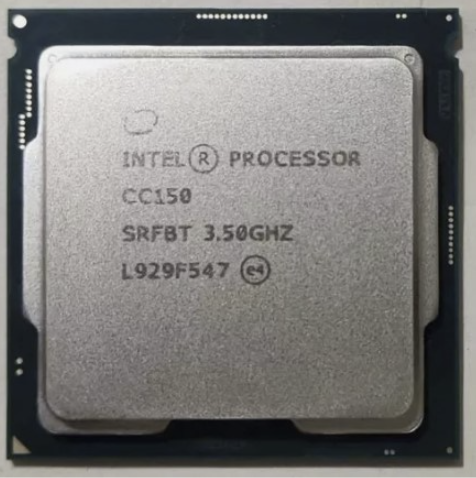
A unique processor developed by Intel for Nvidia GeForce Now servers. Never intended for retail, but later appeared on marketplaces. Built on Coffee Lake Refresh and compatible with all 1151 v2 boards. It offers balanced single‑ and multi‑threaded performance. More details about CC150 can be found here.
| MODEL | INTEL CC150 |
|---|---|
| Architecture | Coffee Lake Refresh, 14 nm |
| Cores \ Threads | 8 \ 16 |
| Memory Support | DDR4-2666 DDR3-1600 |
| Base Frequency | 3500 MHz |
| Max Turbo Boost Frequency | 3500 MHz |
| L3 Cache | 16 MB |
| TDP | 95 W |
| Multiplier | Locked |
| Integrated Graphics | None |
| Approximate Price | AliExpress: $80 - $100 (Check Price) |
Engineering Samples
Engineering samples are pre‑production processors that may be unstable and have compatibility issues. They can have disabled features, altered specs, limited OC capability, or atypical thermals versus retail versions.
| Q-Spec | uArc + Stepping + Core Config | CPUID | Freq + turbo + (all core) GHz | OC | iGPU | TDP | Closest Equivalent | SKU |
|---|---|---|---|---|---|---|---|---|
| QH8E | Skylake A0 4C8T | 506E0h | 2.2-2.6 (2.4) | BCLK | - | 95 W | i7-6400T | Core i |
| QH8F | Skylake A0 4C8T | 506E0h | 2.2-2.6 (2.4) | BCLK | - | 65 W | i7-6400T | Core i |
| QH8G | Skylake A0 4C8T | 506E0h | 2.2-2.6 (2.4) | BCLK | - | 35 W | i7-6400T | Core i |
| QH73 | Skylake A0 4C8T | 506E0h | 2.3-3.1 (2.9) | BCLK | - | 95 W | i7-6400T | Core i |
| QH5N | Skylake A0 4C8T | 506E0h | 2.6-3.4 (3.2) | BCLK | - | 95 W | E3-1230 V5 | Xeon |
| QHQJ | Skylake Q0 4C8T | 506E1h | 1.6-2.2 (2.0) | BCLK | - | 35 W | i7-6400T | Core i |
| QHQG(1) | Skylake Q0 4C8T | 506E1h | 2.2-2.6 (2.4) | BCLK | - | 65 W | i7-6400T | Core i |
| QHQG(2) | Skylake Q0 4C8T | 506E1h | 2.2-2.6 (2.4) | BCLK | - | 80 W | E3-1230 V5 | Xeon |
| QHQF | Skylake Q0 4C8T | 506E1h | 2.6-3.4 | BCLK | - | 95 W | i7-6700K | Core i |
| QHVZ | Skylake Q0 4C4T | 506E1h | 2.2-2.7 (2.4) | BCLK | - | 35 W | i5-6400T | Core i |
| QHVX | Skylake Q0 4C8T | 506E1h | 2.4-2.7 (2.4) | BCLK | - | 35 W | i7-6400T | Core i |
| QHW0 | Skylake Q0 2C4T | 506E1h | 2.1-2.1 (2.1) | BCLK | - | 35 W | i3-6300T | Core i |
| QHJE | Skylake Q0 4C8T | 506E1h | 2.6-3.2 (3.0) | BCLK | - | 80 W | E3-1230 V5 | Xeon |
| QKYM | Kaby Lake A0 4C4T | 506E8h | 2.7-3.3 (3.1) | Locked | HD 630 | 65 W | i5-7400 | Core i |
| QKYN | Kaby Lake A0 4C8T | 506E8h | 3.0-3.5 (3.2) | Locked | HD 630 | 65 W | i7-7700 | Core i |
| QKYP | Kaby Lake A0 4C8T | 506E8h | 3.7-4.1 | BCLK+Multiplier | HD 630 | 95 W | i7-7700K | Core i |
| QKYL | Kaby Lake A0 4C8T | 506E8h | 2.4-3.0 (2.7) | Locked | HD 630 | 35 W | i7-7700T | Core i |
| QL32 | Kaby Lake A0 4C8T | 506E8h | 3.2-3.7 (3.4/3.5) | Locked | - | 74 W | E3-1230 V6 | Xeon |
| QL33 | Kaby Lake A0 4C8T | 506E8h | 3.5-3.9 (3.7) | Locked | HD 630 | 78 W | E3-1245 V6 | Xeon |
| QNBJ | Coffee Lake U0 6C12T | 906EAh | 1.6-3.6 (3.1) | Locked | UHD 630 | 35 W | i7-8700T | Core i |
| QNBH | Coffee Lake U0 6C12T | 906EAh | 2.9-4.0 (3.6) | Locked | UHD 630 | 65 W | i7-8700 | Core i |
| QNBG | Coffee Lake U0 6C12T | 906EAh | 3.2-4.1 | BCLK+Multiplier | UHD 630 | 95 W | i7-8700K | Core i |
| QNLU | Coffee Lake U0 6C12T | 906EAh | 3.7-4.2 | BCLK+Multiplier | UHD 630 | 95 W | i7-8700K | Core i |
| QNLV | Coffee Lake U0 6C12T | 906EAh | 3.2-3.6 | BCLK+Multiplier | UHD 630 | 95 W | i7-8700K | Core i |
| QNLW | Coffee Lake U0 6C12T | 906EAh | 3.1-4.2 (3.9) | Locked | UHD 630 | 65 W | i7-8700 | Core i |
| QNCU | Coffee Lake U0 6C12T | 906EAh | 3.5-4.3 (4.1) | Locked | - | 80 W | E2136 | Xeon |
| QNCV | Coffee Lake U0 6C12T | 906EAh | 3.7-4.3 (4.1) | Locked | UHD P630 | 95 W | E2176G | Xeon |
| QNCW | Coffee Lake U0 6C12T | 906EAh | 3.4-4.3 (4.1) | Locked | UHD P630 | 80 W | E2146G | Xeon |
| QNMR | Coffee Lake U0 6C12T | 906EAh | 2.7-3.8 | BCLK+Multiplier | UHD 630 | 65 W | i7-8700K | Core i |
| QNTM | Coffee Lake U0 6C6T | 906EAh | 3.0-3.0 (3.0) | Locked | UHD P630 | 80 W | E2106G | Xeon |
| QQC0 | Coffee Lake P0 8C16T | 906ECh | 1.7-3.8 (3.1) | Locked | UHD 630 | 35 W | i9-9900T | Core i |
| QQZ6 | Coffee Lake P0 8C16T | 906ECh | 1.7-3.8 (3.1) | Locked | UHD 630 | 35 W | i9-9900T | Core i |
| QQZ5 | Coffee Lake P0 8C16T | 906ECh | 2.6-4.4 (4.2) | Locked | UHD 630 | 65 W | i9-9900T | Core i |
| QQBY | Coffee Lake P0 8C16T | 906ECh | 3.1-4.5 | BCLK+Multiplier | UHD 630 | 95 W | i9-9900K | Core i |
| QQZ4 | Coffee Lake P0 8C16T | 906ECh | 3.1-4.5 | BCLK+Multiplier | UHD 630 | 95 W | i9-9900K | Core i |
| QQBZ | Coffee Lake P0 8C16T | 906ECh | 2.6-4.4 (4.2) | Locked | UHD 630 | 65 W | i9-9900K | Core i |
| QQM5 | Coffee Lake P0 8C16T | 906ECh | 3.1-4.5 (4.3) | Locked | UHD P630 | 95 W | E2288G | Xeon |
| QRA1 | Coffee Lake P0 8C16T | 906ECh | 3.1-4.5 (4.3) | Locked | UHD P630 | ? | E2288G | Xeon |
| QQM6 | Coffee Lake P0 8C16T | 906ECh | 2.6-4.4 (4.2) | Locked | UHD P630 | 80 W | E2278G | Xeon |
| QRA2 | Coffee Lake P0 8C16T | 906ECh | 2.6-4.4 (4.2) | Locked | UHD P630 | 80 W | E2278G | Xeon |
General warning: As ES/QS parts, actual specifications and availability may vary significantly from listed data; unreported variants may exist. Use with caution and expect potential compatibility issues with motherboards, memory, and peripherals that retail chips don’t show.
Xeon compatibility: Xeon SKUs require specific platform support and may not function on consumer boards without BIOS modifications.
Coffee Lake P0 bug: ~3% of early Coffee Lake P0 stepping chips (QQC0, QQBZ, QQBY, QQM6, QQM5) have unstable PCIe controllers causing device issues. Later steppings (QQZ6, QQZ5, QQZ4, QRA2, QRA1) resolved this. Other P0 variants may also be affected.
Mutants
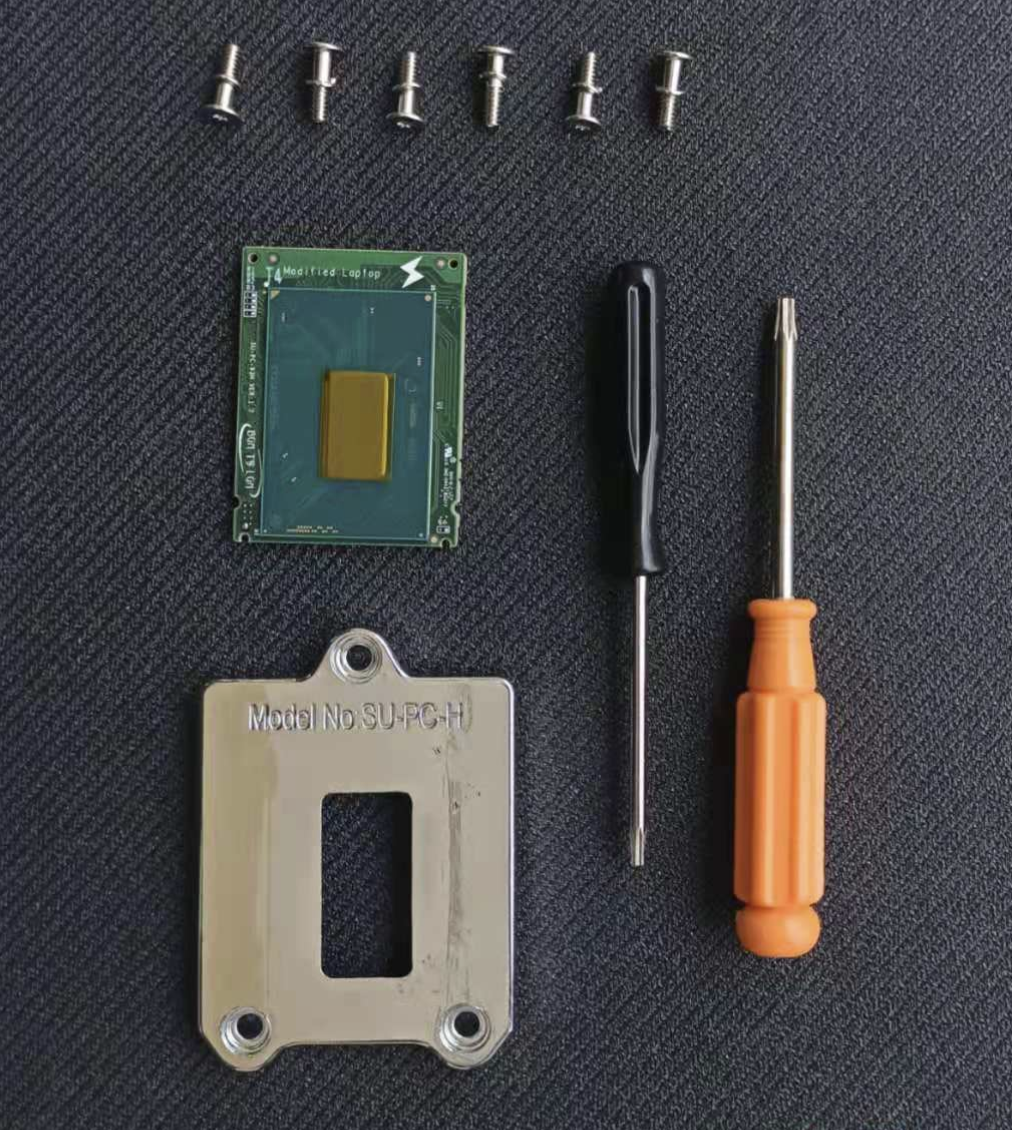
Perhaps the strangest LGA1151 CPUs: mobile chips adapted for desktop motherboards using interposer boards. Both ES and retail parts were modified. They can offer unique features (e.g., overclocking on any chipset) but won’t work out of the box: BIOS mod and flashing are required, and installation is more complex than with retail CPUs. More details here.
Engineering versions
| MODEL | Closest Retail Equivalent | Architecture | Stepping | Cores \ Threads | Base Frequency | Max Turbo Boost Frequency | L3 Cache | TDP | Multiplier | Graphics |
|---|---|---|---|---|---|---|---|---|---|---|
| QPH7 QHR7 | - | Sky Lake, 14 nm | Q0 | 4 \ 8 | 1600 MHz | 2600 MHz | 8 MB | 35 W | Locked | HD Graphics 530 |
| QHPW | - | Sky Lake, 14 nm | Q0 | 4 \ 8 | 2200 MHz | 3000 MHz | 8 MB | 45 W | Locked | HD Graphics 530 |
| QL3X | Core i7-7820HK | Kaby Lake, 14 nm | A0 | 4 \ 8 | 2400 MHz | 3500 MHz | 8 MB | 45 W | Unlocked | HD Graphics 630 |
| QL2X | Core i7-7820HK | Kaby Lake, 14 nm | A0 | 4 \ 8 | 2700 MHz | 3800 MHz | 8 MB | 45 W | Unlocked | HD Graphics 630 |
| QNCT | Core i7-8850H | Coffee Lake, 14 nm | U0 | 6 \ 12 | 2400 MHz | 3600 MHz | 9 MB | 45 W | Locked | UHD Graphics 630 |
| QNVH | Core i7-8850H | Coffee Lake, 14 nm | U0 | 6 \ 12 | 2000 MHz | 3600 MHz | 9 MB | 45 W | Locked | UHD Graphics 630 |
| QRRZ QP87 | Core i7-8750H | Coffee Lake, 14 nm | U0 | 6 \ 12 | 2200 MHz | 4100 MHz | 9 MB | 45 W | Locked | UHD Graphics 630 |
| QP87 | Core i7-8750H | Coffee Lake, 14 nm | U0 | 6 \ 12 | 2200 MHz | 4100 MHz | 9 MB | 45 W | Locked | UHD Graphics 630 |
| QQLT | Core i9-9850HK | Coffee Lake, 14 nm | P0 | 6 \ 12 | 2400 MHz | 4100 MHz | 12 MB | 45 W | Unlocked | UHD Graphics 630 |
| QQLS | Core i9-9880HK | Coffee Lake, 14 nm | P0 | 8 \ 16 | 2100 MHz | 4400 MHz | 16 MB | 45 W | Unlocked | UHD Graphics 630 |
| QS0P | Core i9-9980HK | Coffee Lake, 14 nm | R0 | 8 \ 16 | 2300 MHz | 4800 MHz | 16 MB | 45 W | Locked | UHD Graphics 630 |
| QPQG | Core i9-8950HK | Coffee Lake, 14 nm | U0 | 6 \ 12 | 2900 MHz | 4800 MHz | 12 MB | 45 W | Unlocked | UHD Graphics 630 |
| QRZQ | Xeon E-2276M | Coffee Lake, 14 nm | R0 | 6 \ 12 | 2800 MHz | 4700 MHz | 12 MB | 45 W | ? | UHD Graphics 630 |
| QTJ2 | Core i7-9850H | Coffee Lake, 14 nm | R0 | 6 \ 12 | 2400 MHz | 4300 MHz | 12 MB | 45 W | Locked | UHD Graphics 630 |
| QTJ1 | Core i9-9880HK | Coffee Lake, 14 nm | R0 | 8 \ 16 | 2100 MHz | 4600 MHz | 16 MB | 45 W | Unlocked | UHD Graphics 630 |
| QTJ0 | Core i9-9880HK | Coffee Lake, 14 nm | R0 | 8 \ 16 | 2800 MHz | 4700 MHz | 16 MB | 65 W | Unlocked | UHD Graphics 630 |
Production versions
| MODEL | Architecture | Stepping | Cores \ Threads | Base Frequency | Max Turbo Boost Frequency | L3 Cache | TDP | Multiplier | Graphics |
|---|---|---|---|---|---|---|---|---|---|
| SR3YY Core i7-8750H | Coffee Lake, 14 nm | U0 | 6 \ 12 | 2200 MHz | 4100 MHz | 9 MB | 45 W | Locked | UHD Graphics 630 |
| SR3YZ Core i7-8850H | Coffee Lake, 14 nm | U0 | 6 \ 12 | 2600 MHz | 4300 MHz | 9 MB | 45 W | Locked | UHD Graphics 630 |
| SRDEC Core i3-8100B | Coffee Lake, 14 nm | U0 | 4 \ 4 | 3600 MHz | 3600 MHz | 6 MB | 65 W | Locked | UHD Graphics 630 |
| SRCX3 Core i5-8500B | Coffee Lake, 14 nm | U0 | 6 \ 6 | 3000 MHz | 4100 MHz | 9 MB | 65 W | Locked | UHD Graphics 630 |
| SRCX2 Core i7-8700B | Coffee Lake, 14 nm | U0 | 6 \ 12 | 3200 MHz | 4600 MHz | 12 MB | 65 W | Locked | UHD Graphics 630 |
| SRF6X Core i5-9300H | Coffee Lake, 14 nm | U0 | 4 \ 8 | 2400 MHz | 4100 MHz | 8 MB | 45 W | Locked | UHD Graphics 630 |
| SRFD0 Core i9-9980HK | Coffee Lake, 14 nm | R0 | 8 \ 16 | 2400 MHz | 4900 MHz | 16 MB | 45 W | Unlocked | UHD Graphics 630 |
| SRF6U Core i7-9750H | Coffee Lake, 14 nm | U0 | 6 \ 12 | 2600 MHz | 4500 MHz | 12 MB | 45 W | Locked | UHD Graphics 630 |
| SRFCP Core i7-9750H | Coffee Lake, 14 nm | R0 | 6 \ 12 | 2600 MHz | 4500 MHz | 12 MB | 45 W | Locked | UHD Graphics 630 |
| SR32K Xeon E3 1505M v6 | Kaby Lake, 14 nm | B0 | 4 \ 8 | 3000 MHz | 4000 MHz | 8 MB | 45 W | Locked | HD Graphics P630 |
| SRFCZ Xeon E-2286M | Coffee Lake, 14 nm | R0 | 8 \ 16 | 2400 MHz | 5000 MHz | 16 MB | 45 W | Locked | UHD Graphics P630 |
| SRFCK Xeon E-2276M | Coffee Lake, 14 nm | R0 | 6 \ 12 | 2800 MHz | 4700 MHz | 12 MB | 45 W | Locked | UHD Graphics P630 |
| SRCKQ Xeon-E 2186M | Coffee Lake, 14 nm | U0 | 6 \ 12 | 2900 MHz | 4800 MHz | 12 MB | 45 W | Locked | UHD Graphics 630 |
| SR3YX Xeon-E 2176M | Coffee Lake, 14 nm | U0 | 6 \ 12 | 2700 MHz | 4400 MHz | 12 MB | 45 W | Locked | UHD Graphics 630 |
Compatibility
Compatibility depends primarily on the motherboard chipset. For desktop, there are 11 chipsets in the 100/200 series (1151 v1) and 8 in the 300 series (1151 v2). Additionally, four server chipsets: C232, C236 (1151 v1) and C242, C246 (1151 v2). The table below outlines features, chipsets, and compatibility:
| Chipset | Series | Socket | Supported CPUs | ECC Support | Overclocking | vPro/RAID | Server Grade |
|---|---|---|---|---|---|---|---|
| Z170 | 100 | LGA 1151 | Intel 6th/7th Gen | No | Yes | No | No |
| H170 | 100 | LGA 1151 | Intel 6th/7th Gen | No | No | No | No |
| B150 | 100 | LGA 1151 | Intel 6th/7th Gen | No | No | No | No |
| H110 | 100 | LGA 1151 | Intel 6th/7th Gen | No | No | No | No |
| Z270 | 200 | LGA 1151 | Intel 6th/7th Gen | No | Yes | No | No |
| H270 | 200 | LGA 1151 | Intel 6th/7th Gen | No | No | No | No |
| B250 | 200 | LGA 1151 | Intel 6th/7th Gen | No | No | No | No |
| Q250 | 200 | LGA 1151 | Intel 6th/7th Gen | Yes | No | Yes | No |
| Q270 | 200 | LGA 1151 | Intel 6th/7th Gen | Yes | No | Yes | No |
| Z370 | 300 | LGA 1151 v2 | Intel 8th/9th Gen | No | Yes | No | No |
| Z390 | 300 | LGA 1151 v2 | Intel 8th/9th Gen | No | Yes | No | No |
| H370 | 300 | LGA 1151 v2 | Intel 8th/9th Gen | No | No | No | No |
| B360 | 300 | LGA 1151 v2 | Intel 8th/9th Gen | No | No | No | No |
| H310 | 300 | LGA 1151 v2 | Intel 8th/9th Gen | No | No | No | No |
| C232 | C230 | LGA 1151 | Xeon E3 v5/v6, Core 6th/7th | Yes | No | No | Yes |
| C236 | C230 | LGA 1151 | Xeon E3 v5/v6, Core 6th/7th | Yes | No | No | Yes |
| C242 | C240 | LGA 1151 v2 | Xeon E-21xx/22xx, Core 8th/9th | Yes | No | No | Yes |
| C246 | C240 | LGA 1151 v2 | Xeon E-21xx/22xx, Core 8th/9th | Yes | No | No | Yes |
Did you know you can run ‘incompatible’ CPUs on LGA 1151 v1/v2 boards? Check out our full Coffee-mod breakdown to learn how.
Conclusion and Legacy
LGA1151 stands as one of Intel’s most successful sockets, spanning five years and four generations. Over its lifecycle, the platform saw:
- The transition from DDR3 to DDR4
- The “core wars” response to AMD Ryzen
- The introduction of 8‑core CPUs to mainstream desktop
- The emergence of unique mods and “mutant” processors
- The return of soldered heatspreaders (STIM) on flagships
Despite succession by LGA1200 and LGA1700, LGA1151 remains relevant for budget builds and upgrades. Its broad CPU support, mature ecosystem, and affordable hardware make it an excellent choice for cost‑conscious users seeking solid performance.
The socket’s legacy extends beyond its official lifespan through enthusiast innovation — from Coffee Mod techniques to Frankenstein processors — proving that a solid platform can remain relevant long after official support ends.

Written by
Senior Hardware Specialist proving you don't need top-tier gear to game. Expert in smart upgrades and budget-friendly PC restoration.