
Table of Contents
The X99‑XD4 is a solid mATX motherboard from Angthumb. Released in 2025, it can be found under multiple brands: Machinist, KEYIYOU, Atermiter, and others. There’s also a DDR3 version with a more limited CPU support list, sold as X99‑XD3.
Judging by the layout, this board is related to Angthumb’s X99D4M4 and looks like a refined iteration — and we like the result. Let’s take a closer look.
In this article we cover the second revision, which is indicated by the marking next to the 24‑pin connector. We don’t know whether there was an earlier “first” revision or if this is just a quirk of Chinese naming. In any case, be aware that other revisions may exist and their characteristics may differ.

Specifications
| Model | X99-XD4 V2.0 |
|---|---|
| Socket | LGA 2011-3 |
| Chipset | C612 |
| Supported Processors | Intel Core i7 (5000, 6000 series, Haswell-E/Broadwell-E) Intel Xeon E5-1600 v3/v4, E5-2600 v3/v4, E5-4600 v3/v4 (Haswell-EP/Broadwell-EP) |
| VRM Configuration | 4 phase (8 virtual via doublers) Total MOSFETs: 16 (8 high-side + 8 low-side) |
| Maximum Recommended TDP | ≤130W (v3 processors) ≤140W (v4 processors) |
| Supported Memory | 4 x DDR4 DIMM (quad-channel) with ECC and non-ECC support Maximum capacity: 128 GB |
| Sleep Mode Support | No |
| Expansion Slots | 1 x PCI-e x16 (Gen 3.0) 1 x PCI-e x4 (Gen 3.0) 1 x PCI-e x1 (Gen 2.0) |
| Storage | 6 x SATA 3.0 1 x M.2 (NVME, Gen 3.0 x4) 1 x M.2 (NVME/NGFF, Gen 3.0 x4) |
| Fan Connectors | 1 x CPU cooler (4pin) 1 x Case fan (4pin) 1 x Case fan (3pin) |
| PS/2 Ports | No |
| USB 3.0 Ports | 4 (+ front panel support) |
| USB 2.0 Ports | 4 (+ front panel support) |
| Network | Gigabit LAN (RTL8111 \ RTL8168) |
| Audio | 5.1 channel (ALC897) |
| M.2 Wi-Fi port | Yes |
| Bios Chip | W25Q128FV / FM25W128 |
| JLPC1\DEBUG header | Yes |
| TPM 2.0 header | Yes (MSI 14pin LPC) |
| PCB Layers | 6 |
| Form Factor & Dimensions | mATX 237 x 185 mm |
| Approximate Price |


Built on a server‑class chipset, the X99‑XD4 leaves a good impression. It has everything you need for a modern X99 build: sufficient I/O, quad‑channel memory, a competent VRM, a stable BIOS, and native TPM 2.0 support, making the board effectively Windows 11‑ready.
The main drawback is the non‑functional sleep mode; you’ll have to use hibernation instead. A smaller annoyance is the placement of the TPM 2.0 header: with bulky triple‑slot GPUs, there’s almost no clearance between the card and a TPM module.
BIOS Capabilities
The stock BIOS is based on AMI Aptio and, unlike most Chinese boards, includes nearly everything you need.

Out of the box you get RAM timing control, working Resizable BAR, PCIe bifurcation, and Smart Fan control on both 4‑pin fan headers. Naturally, there’s TPM 2.0 and Secure Boot support as well.
The usual Chinese quirks remain: non‑functional motherboard temperature sensors (don’t panic if you see readings around 120°C), no control for 3‑pin fan headers, no overclocking for unlocked‑multiplier CPUs, and the “Restore on AC Power Loss” option is hidden by default. Even so, the stock firmware is perfectly usable for daily operation.
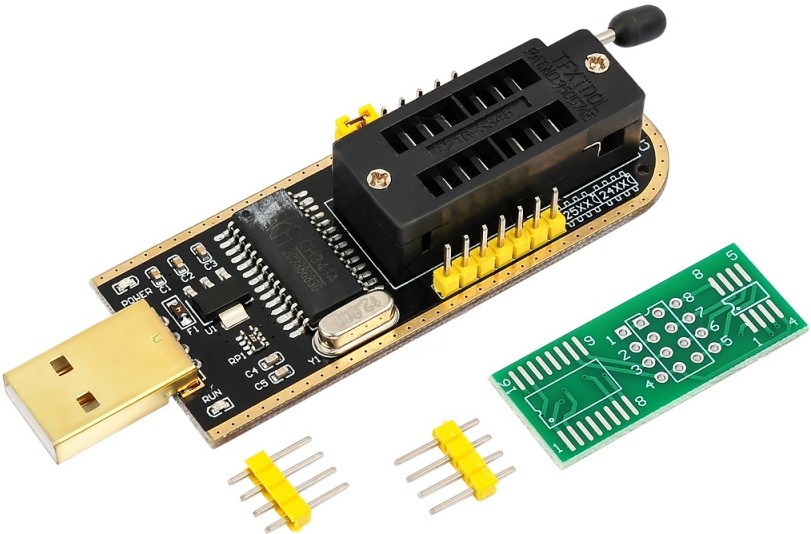
One frustrating detail worth mentioning is that the manufacturer often uses FUDAN BIOS chips. Unlike the widely adopted Winbond chips, FUDAN hardware is less common, making compatible BIOS files harder to find. Additionally, not all flashing utilities support these chips.
Simple BIOS Flashing Guide (Windows)
| BIOS version & date | Ram Timings | ReBAR | Unlocked CPU OC | Turbo Boost unlock | Undervolt | Notes & Link |
|---|---|---|---|---|---|---|
| X9XD4 Ver:002 05/07/2025 10:34:02 | + | + | - | - | - | Stock BIOS [Download] |
| X9XD4 Ver:002 05/07/2025 10:34:02 | + | + | + | - | - | Stock BIOS mod (Restore on AC Power Loss + overclocking through Intel XTU) [Download] |
| X9XD4 Ver:002 05/07/2025 10:34:02 | + | + | + | + | -50 mV | Stock BIOS mod + TBU (undervolt -50 mV) [Download] |
| X9XD4 Ver:003 11/13/2025 09:39:26 | + | + | - | - | - | Stock BIOS [Download] |
| X9XD4 Ver:003 11/13/2025 09:39:26 | + | + | + | - | - | Stock BIOS mod (Overclocking through Intel XTU) [Download] |
| X9XD4 Ver:003 11/13/2025 09:39:26 | + | + | - | + | -50 mV | Stock BIOS mod + TBU (undervolt -50 mV) [Download] |
- Download FPTW 9.1.10 from this page.
- Open Command Prompt as Administrator.
- Copy your BIOS file (
bios.binorbios.rom) into the same folder as FPTW. - In Command Prompt, navigate to the FPTW folder using the
cdcommand. - Backup first:
fptw64 -d backup.bin - Flash the BIOS:
fptw64 -f bios.bin
Note: Replace bios.bin with the actual name of your BIOS file.
FPT error 103? If FPT stops with “There are no supported SPI flash devices installed”, it usually just means your board’s flash chip is missing from FPT’s chip list. Here’s how to fix FPT error 103.
After flashing, load BIOS defaults or clear CMOS to reset settings.
Frequently Asked Questions
The board won’t boot, black screen, etc. What should I do?
See our article about the most common LGA2011‑3 issues.
Where can I find drivers for this board?
Current drivers for socket 2011‑3 boards can be found here.
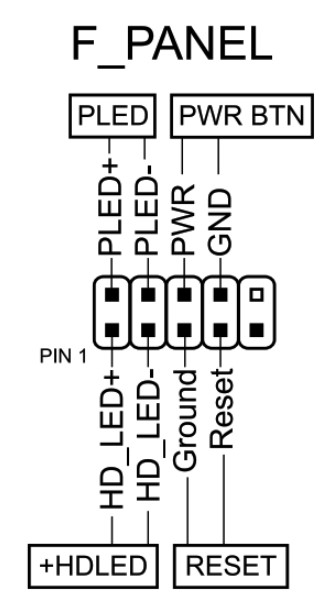
How do I connect the front panel?
Can the board boot without a graphics card?
Yes, headless boot is possible on the stock BIOS.
Where is the BIOS chip located?
To the right of the chipset heatsink.

Which TPM 2.0 module is compatible with this board?
You need an MSI 14‑pin LPC TPM 2.0 module — for example, this one.

Conclusion
OldRigRevive Review
5.0
4.0
4.5
4.5

Written by
Senior Hardware Specialist proving you don't need top-tier gear to game. Expert in smart upgrades and budget-friendly PC restoration.
x99 xd4 has released bios version 003 at 2025-11-27,can you update mod bios?
Thanks for pointing out the newer version. However, the latest one I was able to find is dated November 13, 2025. I’ve added the original BIOS along with the mods.
Can you please point to where the original x99 xd4 BIOS are released? I’m considering buying this board and can only find your page as a source of BIOS, I’d like to find where they came from. Thank you!
Angthumb posts BIOS files for its motherboards here
Thank you, I am considering ordering one of these and really appreciate your helpful site.
Hi. I have one of those boards, and they are pretty good, can recommend! One question, these undervolt BIOS’es apply to v4 CPU’s? Also, is it possible to change the BCLK in v4 CPU’s with a BIOS mod?
Hi! Glad to hear you like the board, they’re actually pretty decent for the price.
About undervolting: unfortunately, the undervolt BIOS mods generally do NOT work with v4 CPUs. The only exceptions are some QS sample v4 chips, but regular retail Broadwell-EP CPUs are basically locked down.
As for BCLK — on Chinese X99 boards there’s usually no real BCLK overclocking support. At most, you can only force a proper fixed 100.0 MHz base clock instead of the slightly fluctuating default value.
Hello, I was wondering if you have tested any X99 boards with LRDIMM modules? Information about LRdimm compatibility is scarce online. I’ve looked at the Machinist X99-B9, Qiyida H9S/K9S, X99-XD4, and various US brands.
Regarding LRDIMM support on Chinese LGA 2011-3 boards, I haven’t personally tested the X99-XD4, so compatibility is never 100% guaranteed on that exact board, but LRDIMM generally has a very high success rate across the X99 platform. Their main advantage is capacity: standard RDIMM maxes out at 32GB per module, whereas LRDIMM allows you to run 64GB sticks (and up to 128GB for 3DS TSV LRDIMM). If you need 64GB per slot or want to push your system beyond 128GB–256GB total RAM, LRDIMM is your best option, though you cannot mix LRDIMM with other memory types.
The main caveat with LRDIMM comes down to latency and boot quirks on X99. Due to the extra data buffer chips on the modules, latency is slightly higher, and sub-timings are trickier to tighten. Also, if you buy fast modules like 2666MHz LRDIMMs, the board might fail to POST on “Auto” settings if your CPU only supports lower base frequencies (2133\2400MHz). In that case, you may need a basic 2133MHz stick just to enter the BIOS, manually set the memory frequency, and then swap your LRDIMMs back in.
Unless you specifically need 64GB sticks, standard RDIMMs remain the cheaper, lower-latency choice for X99 systems.