Table of Contents
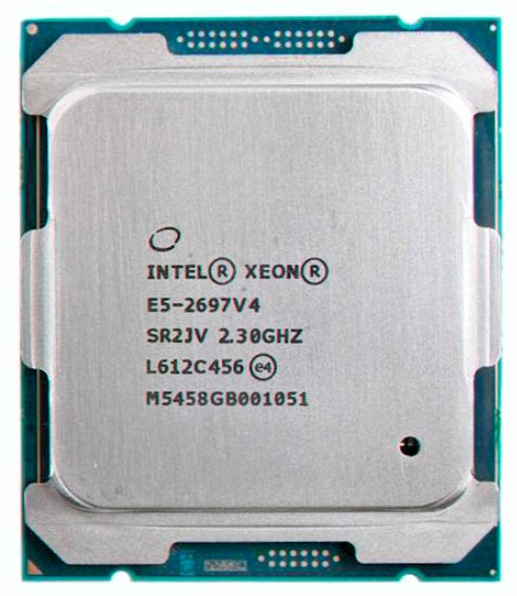
Xeon E5-2697A v4 is a versatile, appealing processor for LGA2011‑3, combining a substantial core count with solid clocks. It only became widely available in 2023–2024; before that it was prohibitively expensive for home use.
This SKU has two fewer cores than the standard E5-2697 v4, but its all‑core frequency is 300 MHz higher (200 MHz higher under AVX). A close alternative is the E5-2690 v4, which drops two more cores while keeping near‑identical clocks.
Specifications
| Model | Xeon e5 2697A v4 |
|---|---|
| Socket | LGA2011-3 |
| Release Date | Q1 2016 |
| Architecture | Broadwell-EP, 14 nm |
| Cores / Threads | 16 / 32 |
| Memory support | DDR4-2400, 4-channel |
| Base Frequency | 2600 MHz |
| Max Turbo Frequency | 3600 MHz (1-2 Cores) 3400 MHz (3 Cores) 3300 MHz (4 Cores) 3200 MHz (5 Cores) 3100 MHz (6+ Cores) |
| Extensions & Features | MMX instructions SSE / Streaming SIMD Extensions SSE2 / Streaming SIMD Extensions 2 SSE3 / Streaming SIMD Extensions 3 SSSE3 / Supplemental Streaming SIMD Extensions 3 SSE4 / SSE4.1 + SSE4.2 / Streaming SIMD Extensions 4 AES / Advanced Encryption Standard instructions AVX / Advanced Vector Extensions AVX2 / Advanced Vector Extensions 2.0 BMI / BMI1 + BMI2 / Bit Manipulation instructions F16C / 16-bit Floating-Point conversion instructions FMA3 / 3-operand Fused Multiply-Add instructions EM64T / Extended Memory 64 technology / Intel 64 HT / Hyper-Threading technology VT-x / Virtualization technology VT-d / Virtualization for directed I/O TBT 2.0 / Turbo Boost technology 2.0 TSX / Transactional Synchronization Extensions NX / XD / Execute disable bit ? TXT / Trusted Execution technology Enhanced Intel SpeedStep technology |
| AVX Offset | -2 |
| L3 Cache | 40 Mb |
| PCIe Lanes | 40, Gen 3.0 |
| TDP | 145 W |
| Maximum operating temperature (Tjmax) | 93°C |
| Multiplier | Locked |
| Integrated Graphics | None |
| CPUID | 0x406F1 |
| Approximate Price | AliExpress: $50 - $65 (Check Price) |
Main advantages of the model in 2025:
- Many cores; excellent multithreaded performance
- Ability to operate in both single‑socket and dual‑socket configurations
- Moderate heat output; works with affordable 4+ heatpipe tower coolers
- Excellent price‑to‑performance ratio
- Wide availability on the used market
Main disadvantages:
- Aging architecture; lower IPC versus modern CPUs
- Not suitable for budget boards with weak VRM
- Official memory ceiling of 2400 MT/s (quad‑channel helps bandwidth)
Compared to similar‑TDP v3 parts, the E5‑2697A v4 is less demanding on motherboard power delivery. Budget “Chinese X99” boards still aren’t recommended, but decent mid‑range boards usually handle it without major issues even under sustained loads.
Power Consumption and Thermals
Despite the 145 W TDP, real‑world power draw typically sits around 90–120 W in games and approaches the full TDP only in heavy all‑core workloads. A quality tower cooler with 4+ heatpipes is recommended to sustain boost clocks under prolonged loads.
Overclocking Capability
The multiplier is locked, so overclocking is limited. A handful of high‑end X99/LGA2011‑3 boards can nudge BCLK, adding roughly 3–4% performance, but it won’t change the overall picture.
Performance and Tests
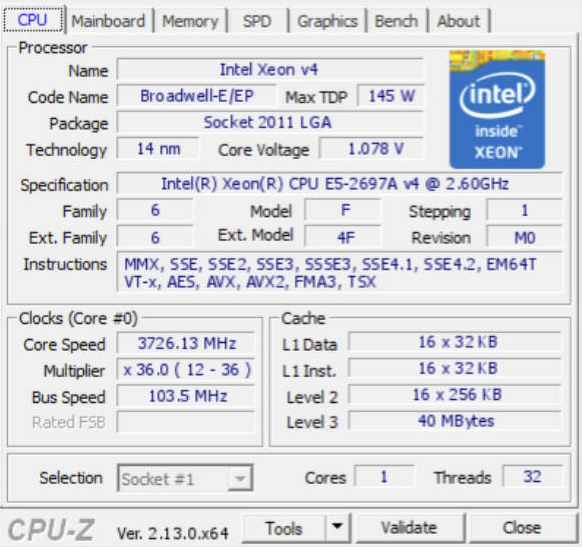
Many cores and the newer Broadwell‑EP architecture deliver strong multithreaded results. Single‑core performance, by modern standards, is modest.
CPU‑Z
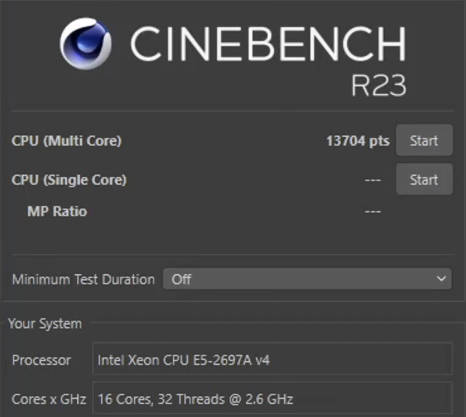
Cinebench R20, R23
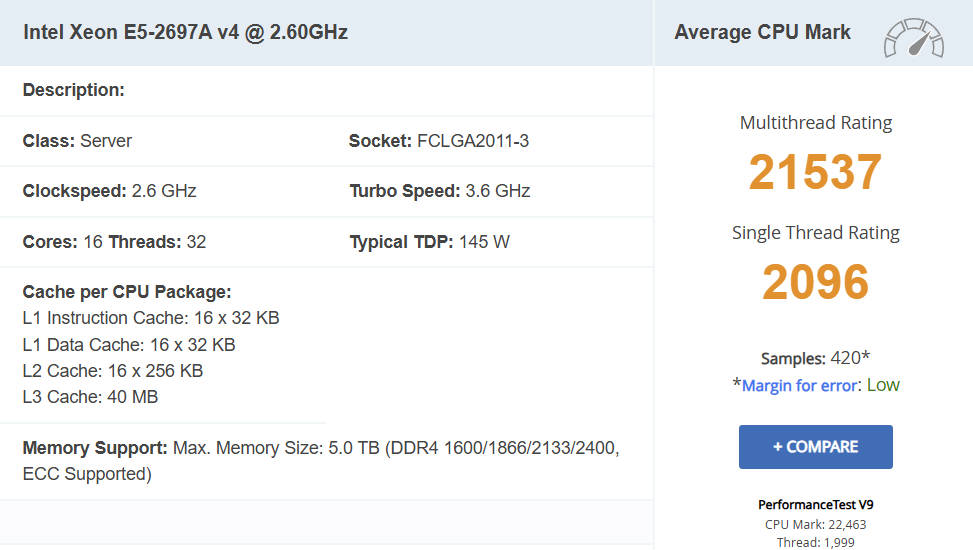
PassMark
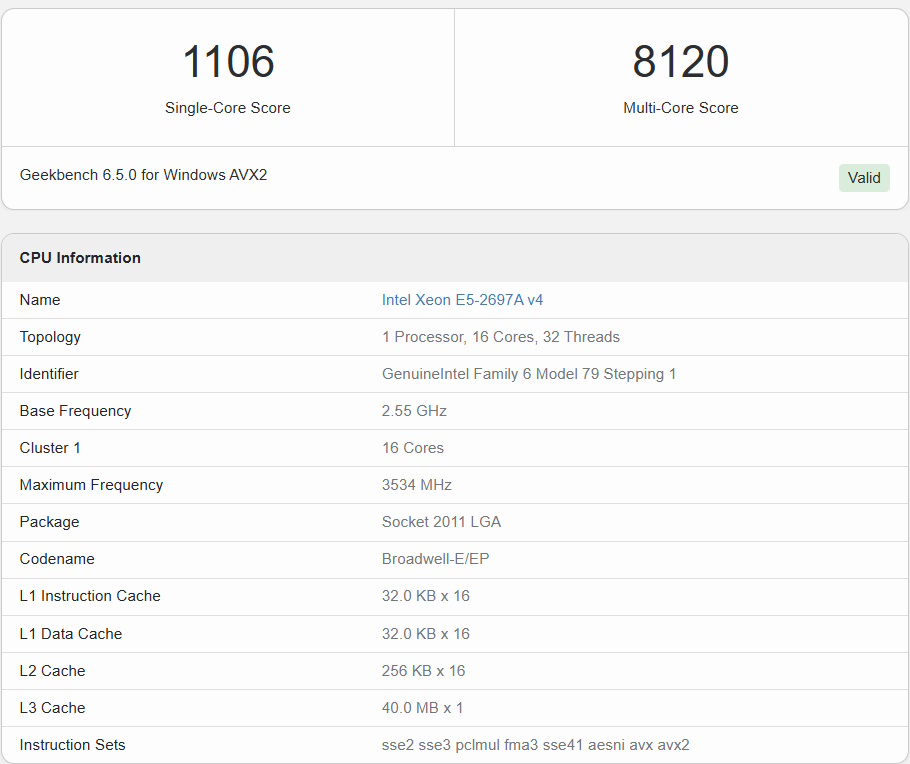
Geekbench 6
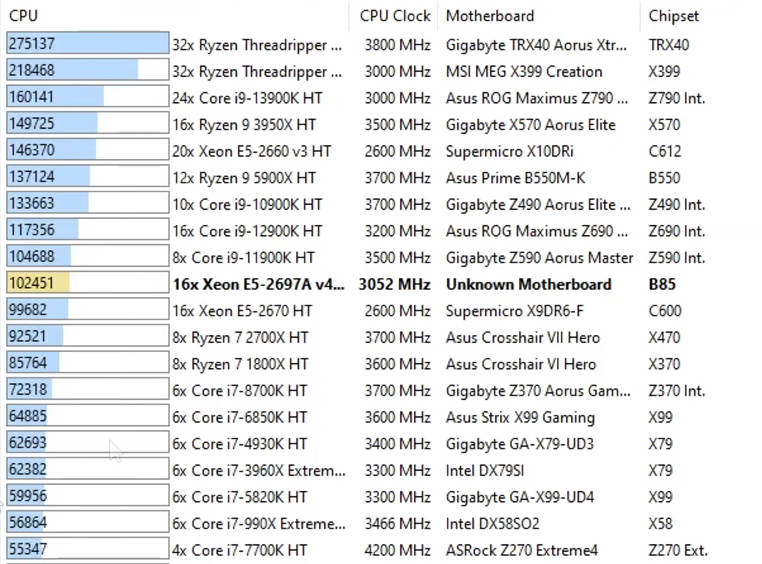
AIDA64 CPU Queen
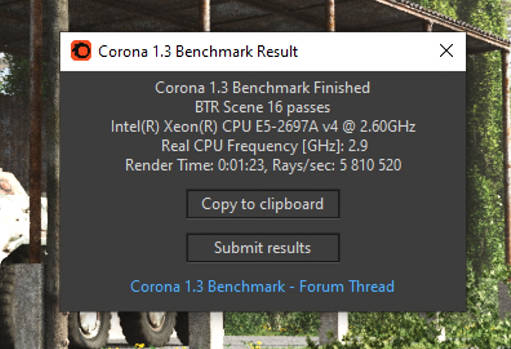
Corona 1.3
Summary
| Xeon E5 2697a v4 | |
|---|---|
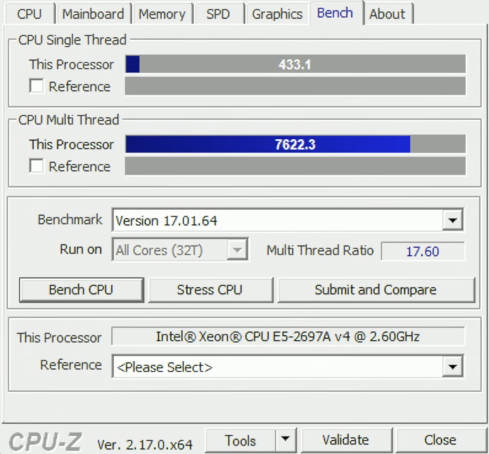
| CPU-Z (single) | ~430 |
| CPU-Z (multi) | ~7600 |
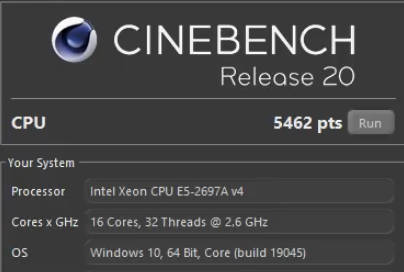
| Cinebench R20 | ~5450 |
| Cinebench R23 | ~13700 |
| PassMark Multithread | ~21500 |
| GeekBench6 Multithread | ~8100 |
| AIDA64 CPU Queen | ~102500 |
| Corona 1.3 | ~01:20 |
Gaming Performance
The E5‑2697A v4 does well in games that can leverage many cores, but don’t expect high frame rates in titles where single‑core performance is critical.
- Games up to 2020: 95% run well (60+ FPS), 5% are playable (40–60 FPS)
- Games 2020–2026: 80% run well (60+ FPS), 10% are playable (40–60 FPS), 10% are unplayable (low FPS, stutter, micro‑stutter)
Gaming performance paired with RX 7900 XT:

Gaming performance comparison with E5‑2690 v4, E5‑2687 v3 (TBU), and E5‑2696 v3 (TBU):

Close Alternatives
V3 series (TBU possible, but hotter and less power‑efficient; Haswell‑EP):
- Xeon E5-2697 v3 (14/28, up to 3.6 GHz, 35 MB L3)
- Xeon E5-2698 v3 (16/32, up to 3.6 GHz, 40 MB L3)
- Xeon E5-2696 v3 / E5-2699 v3 (18/36, up to 3.8 GHz, 45 MB L3)
V4 series (TBU not possible, cooler and more power‑efficient; Broadwell‑EP):
- Xeon E5-2690 v4 (14/28, up to 3.5 GHz, 35 MB L3)
- Xeon E5-2697 v4 (18/36, up to 3.6 GHz, 45 MB L3)
- Xeon E5-2696 v4 / E5-2699 v4 (22/44, up to 3.7 GHz, 55 MB L3)
Revisions
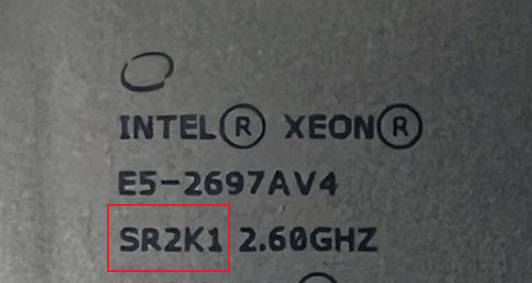
In addition to the final version with S‑spec code SR2K1, at least one pre‑release version QK7S is known. Both versions are stepping B0.
AmiBCP Incompatibility Warning

Be careful if you decide to modify the motherboard BIOS via AMIBCP. In most cases, after flashing a BIOS modified with the utility, systems with the E5‑2697A v4 may fail to boot, stopping at POST code 91.
This behavior is characteristic of many HCC (high core count) v4 processors, but its true causes are unknown.
Frequently Asked Questions
Is Turbo Boost Unlock (TBU) possible?
No, TBU is only possible on Haswell (v3) processors.
Is undervolting possible?
Typically only for QS models; most retail/OEM versions lock voltage control.
Is there solder or thermal paste under the lid?
There’s solder under the lid, as with the entire Xeon E5 v3/v4 lineup.
Is the processor compatible with Windows 11?
No, the Xeon E5‑2697A v4 is not officially supported by Windows 11, but it works fine if you bypass the CPU and TPM checks during installation.

Written by
Senior Hardware Specialist proving you don't need top-tier gear to game. Expert in smart upgrades and budget-friendly PC restoration.