Table of Contents
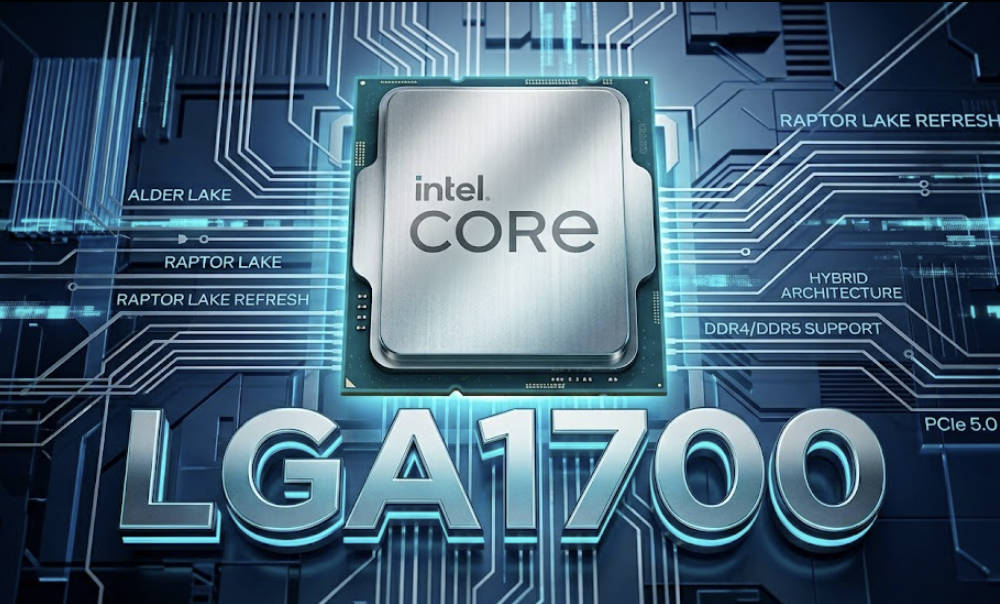
LGA1700 (also known as Socket V) debuted at the end of 2021, replacing LGA1200 and marking a major architectural shift for Intel’s consumer platforms. The socket housed three processor generations—Alder Lake, Raptor Lake, and Raptor Lake Refresh—spanning everything from budget Celerons to extreme Core i9s. The platform’s defining feature was its shift to a hybrid architecture, combining performance cores (P-cores) and efficiency cores (E-cores).
In addition to the new core layout, LGA1700 introduced support for cutting‑edge standards — DDR5 memory and PCIe 5.0, while retaining compatibility with cheaper DDR4 memory. Below, we analyze the platform’s key features, supported architectures and chipset lineup. You’ll also find the most complete list we could compile of all existing processors for this socket: from retail desktop SKUs to engineering samples, server models and mobile “mutants” adapted for desktop use via custom interposers.
LGA1700 Processor Architectures and Features
12th Generation — Alder Lake-S
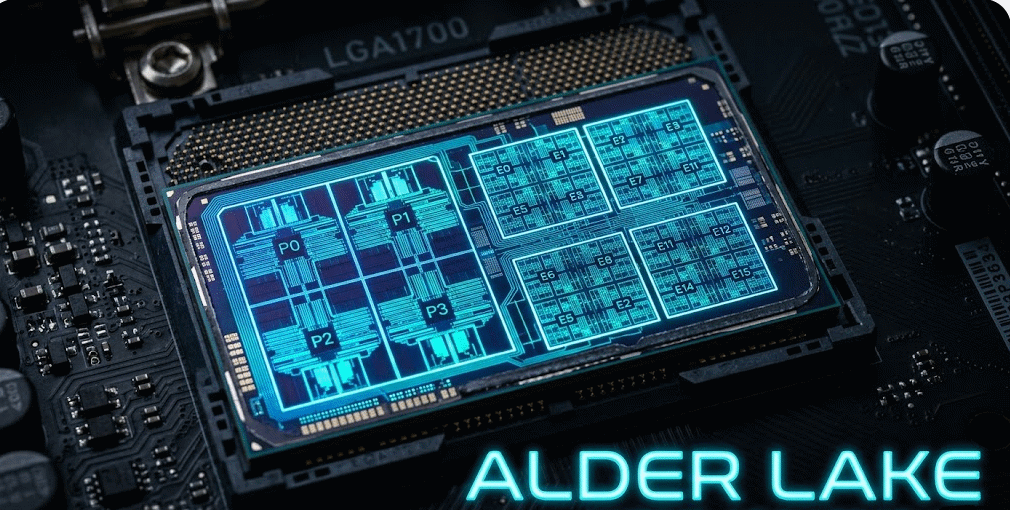
In October 2021, Intel introduced its 12th‑generation processors codenamed Alder Lake. This marked a major turning point: the company not only moved to a new process node and the LGA1700 socket, but for the first time brought a hybrid architecture to the desktop segment, radically changing the way CPU resources are allocated.
Key architectural features:
- Intel 7 process: Intel’s branded 10nm (SuperFin) node, which in terms of transistor density and characteristics became competitive with TSMC’s 7 nm solutions.
- Hybrid (big.LITTLE‑style) architecture: cores are split into two types: high-performance P-cores (Golden Cove) with Hyper-Threading support and energy-efficient E-cores (Gracemont) for background tasks and heavily threaded workloads.
- Intel Thread Director: a hardware‑level scheduler working together with the OS to intelligently distribute load between different core types.
- Memory controller: the industry’s first dual‑mode controller with support for both next‑gen DDR5 (up to 4800 MHz) and proven DDR4 (up to 3200 MHz). This allowed users to transition to the new platform smoothly.
- Interfaces: PCIe 5.0 support (16 CPU lanes) for future graphics cards and dedicated 4 PCIe 4.0 lanes for ultra‑fast NVMe drives. The updated DMI 4.0 bus doubled the bandwidth between the CPU and the chipset.
- UHD 770 graphics: based on the Intel Xe (Gen12) architecture, delivering a noticeable boost in video acceleration (Quick Sync) and support for modern codecs, including AV1.
- Instructions: AVX‑512 support existed in early P‑core revisions but was later disabled by Intel to keep behavior consistent with E‑cores (which do not support AVX‑512).
Alder Lake returned Intel to the top in single‑threaded performance and gaming. However, the rectangular shape of the new CPUs and the relocated socket pressure points in LGA1700 led to the well‑known issue of IHS bending, giving rise to a market for corrective contact frames — accessories that effectively became mandatory for enthusiasts. Most of today’s popular “mutants” and engineering samples are based on Alder Lake dies (C0 stepping), and are now highly sought‑after among budget‑minded overclockers.
13th Generation — Raptor Lake-S
Introduced in October 2022, the 13th‑generation Raptor Lake processors are a deep refinement of Alder Lake. Intel opted for a brute-force approach to scaling: increasing cache sizes, adding more efficiency cores, and pushing clock speeds to the extreme.
Key architectural features:
- Raptor Cove cores: updated performance cores with greatly increased L2 cache — 2 MB per core (vs 1.25 MB on Alder Lake). This reduced trips to the slower L3 cache and delivered a tangible uplift in games.
- E‑core scaling: the number of Gracemont efficiency cores was doubled across the stack (Core i5, i7, i9). The top models feature an 8P + 16E configuration for a total of 32 threads, a level previously seen only in the HEDT segment.
- Refined process node: using an optimized Intel 7 (3rd generation) process allowed frequency increases of 500–600 MHz or more compared to predecessors.
- Memory controller: official DDR5 support was raised to 5600 MHz, while full compatibility with DDR4‑3200 was retained.
- Ring bus and cache: more E‑core clusters increased the shared L3 (Smart Cache) capacity to 36 MB, and a higher ring bus frequency helped reduce overall system latency.
Raptor Lake cemented LGA1700 as the leader in multi‑threaded workloads, but it was also this generation where power consumption surged (PL2 up to 253 W and beyond), forcing users to invest in serious cooling and solid motherboards.
14th Generation — Raptor Lake-S Refresh
Released in October 2023, the 14th generation became the final stage in the LGA1700 socket’s lifecycle. As the “Refresh” name suggests, this wasn’t a brand‑new architecture but rather the result of binning the best Raptor Lake silicon, paired with factory overclocks and targeted firmware or hardware tweaks.
Key architectural features:
- Frequency record: flagship models (Core i9‑14900K/KS) were the first in the industry to officially hit 6.0 GHz out‑of‑the‑box thanks to Thermal Velocity Boost.
- Core i7‑14700K upgrade: the only SKU in the lineup with a physically changed core configuration. It received 4 additional E‑cores (for a total of 8P + 12E), making it effectively comparable in performance to the previous‑gen flagship i9‑13900K.
- Intel Application Optimization (APO): a new software layer for the scheduler, initially available only for 14th‑gen (later extended to top 12th‑ and 13th‑gen SKUs). It optimizes resource allocation in supported games, delivering up to 10–15% extra FPS via smarter thread handling.
- Interface support: while the underlying platform didn’t change, many refreshed Z790 motherboards gained Wi‑Fi 7 and Bluetooth 5.4 support.
- Memory OC headroom: thanks to process maturity and improved controllers, 14th‑gen CPUs handle high‑frequency DDR5 better, allowing stable 8000+ MHz speeds on high‑end boards.
The main discussion point around the 14th generation was longevity. The push for extreme clocks and high operating voltages (Vmin) led to instability and degradation concerns.
Stability and Degradation Issues on 13th and 14th Gen (Vmin Shift)
The instability of flagship 13th and 14th Gen CPUs (i7 and i9 series) remains a major pain point for the platform. To achieve competitive 6.0 GHz boost clocks, Intel allowed excessive voltage on Raptor Lake dies, which in some cases led to irreversible physical changes in transistor structures — the so‑called Vmin Shift (a drift in the minimum stable operating voltage).
Key aspects of the issue:
- Symptoms: “Out of video memory” errors during shader compilation in games, random BSODs and application crashes under heavy load, becoming more frequent over time.
- Causes: aggressive boosting mechanisms (TVB, ABT), high default power limits on many motherboards, and microcode requesting excessively high voltages under peak loads.
- Mitigations: Intel released a series of microcode updates (0x129, 0x12B, etc.) that cap voltage spikes above ~1.55 V. Modern BIOSes also include “Intel Default Settings” profiles that strictly enforce PL1/PL2 power limits.
- Recommendations: to extend the life of Raptor Lake CPUs, enthusiasts are advised not only to update the BIOS but also to perform manual undervolting, which significantly drops temperatures and power draw without degrading performance.
It’s worth noting that 12th‑gen (Alder Lake) is practically unaffected by this issue, making those CPUs some of the most reliable and predictable options on the LGA1700 platform today.
All Socket 1700 Processors and Their Specifications
Intel Processor Naming
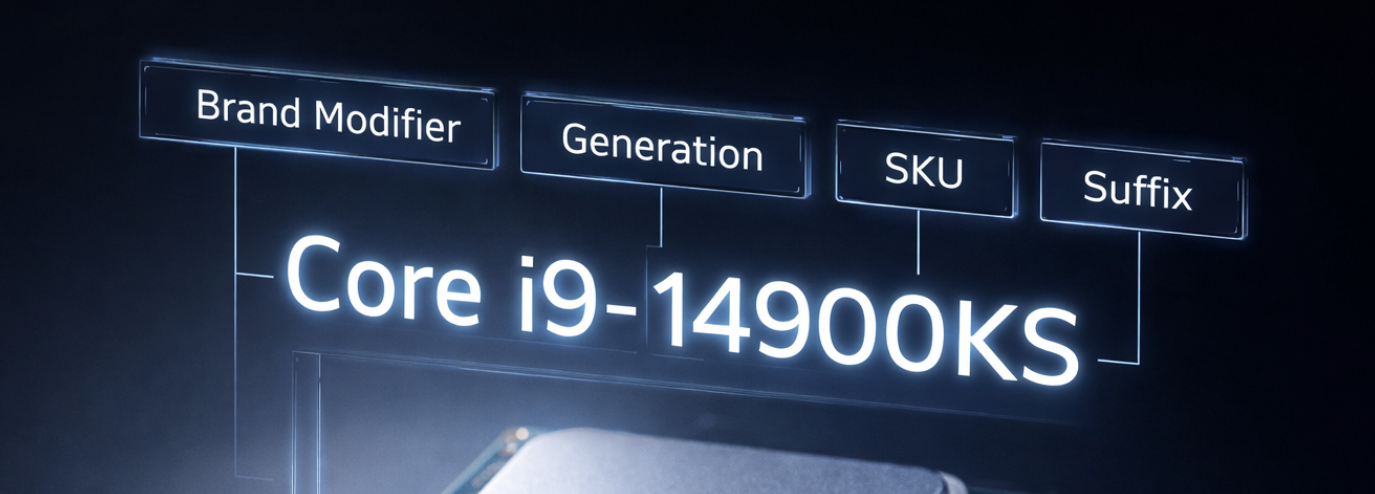
A processor’s model number indicates its performance tier, while the suffix reveals specific architectural features.
Main suffixes:
- K — unlocked multiplier (multiplier‑based overclocking enabled).
- F — no integrated graphics (a discrete GPU is required).
- KF — unlocked multiplier and no iGPU.
- T — energy‑efficient versions with lowered clocks and TDP limit (typically 35 W).
- KS — “Special Edition” (binned dies with the highest possible out‑of‑box clocks, lineup flagships).
- E — Embedded (embedded-class parts). On LGA1700 (especially 14th Gen), many Embedded models completely lack E-cores, featuring only performance P-cores.
- No suffix — standard desktop models with locked multiplier and 65 W TDP.
How to identify the architecture by model number:
- Alder Lake (12th gen) — model numbers starting with 12 (for example, Core i5‑12400, Core i9‑12900K). This group also includes Pentium Gold G7400 and Celeron G6900.
- Raptor Lake (13th gen) — model numbers starting with 13 (for example, Core i7‑13700K, Core i3‑13100).
- Raptor Lake Refresh (14th gen) — model numbers starting with 14 (for example, Core i5‑14600K, Core i7‑14700K). The entry-level Intel Processor 300 and 300T models are also based on this architecture.
Retail Desktop
Alder Lake
| Model | Cores (P+E) | Threads | L3 Cache (MB) | L2 Cache (MB) | P-core Base (GHz) | E-core Base (GHz) | Max P-core Turbo (GHz) | Max E-core Turbo (GHz) | iGPU | Base TDP (W) | Max Turbo Power (W) | Unlocked | Memory Support |
|---|---|---|---|---|---|---|---|---|---|---|---|---|---|
| Intel Core i9-12900KS | 16 (8+8) | 24 | 30 | 14 | 3.4 | 2.5 | 5.5 | 4.0 | UHD Graphics 770 | 150 | 241 | Yes | DDR5-4800 / DDR4-3200 |
| Intel Core i9-12900K | 16 (8+8) | 24 | 30 | 14 | 3.2 | 2.4 | 5.2 | 3.9 | UHD Graphics 770 | 125 | 202 | Yes | DDR5-4800 / DDR4-3200 |
| Intel Core i9-12900KF | 16 (8+8) | 24 | 30 | 14 | 3.2 | 2.4 | 5.2 | 3.9 | None | 125 | 202 | Yes | DDR5-4800 / DDR4-3200 |
| Intel Core i9-12900 | 16 (8+8) | 24 | 30 | 14 | 2.4 | 1.8 | 5.1 | 3.8 | UHD Graphics 770 | 65 | 202 | No | DDR5-4800 / DDR4-3200 |
| Intel Core i9-12900F | 16 (8+8) | 24 | 30 | 14 | 2.4 | 1.8 | 5.1 | 3.8 | None | 65 | 202 | No | DDR5-4800 / DDR4-3200 |
| Intel Core i9-12900T | 16 (8+8) | 24 | 30 | 14 | 1.4 | 1.0 | 4.8 | 3.6 | UHD Graphics 770 | 35 | 106 | No | DDR5-4800 / DDR4-3200 |
| Intel Core i7-12700K | 12 (8+4) | 20 | 25 | 12 | 3.6 | 2.7 | 5.0 | 3.8 | UHD Graphics 770 | 125 | 190 | Yes | DDR5-4800 / DDR4-3200 |
| Intel Core i7-12700KF | 12 (8+4) | 20 | 25 | 12 | 3.6 | 2.7 | 5.0 | 3.8 | None | 125 | 190 | Yes | DDR5-4800 / DDR4-3200 |
| Intel Core i7-12700 | 12 (8+4) | 20 | 25 | 12 | 2.1 | 1.6 | 4.9 | 3.6 | UHD Graphics 770 | 65 | 180 | No | DDR5-4800 / DDR4-3200 |
| Intel Core i7-12700F | 12 (8+4) | 20 | 25 | 12 | 2.1 | 1.6 | 4.9 | 3.6 | None | 65 | 180 | No | DDR5-4800 / DDR4-3200 |
| Intel Core i7-12700T | 12 (8+4) | 20 | 25 | 12 | 1.4 | 1.0 | 4.6 | 3.4 | UHD Graphics 770 | 35 | 99 | No | DDR5-4800 / DDR4-3200 |
| Intel Core i5-12600K | 10 (6+4) | 16 | 20 | 9.5 | 3.7 | 2.8 | 4.9 | 3.6 | UHD Graphics 770 | 125 | 150 | Yes | DDR5-4800 / DDR4-3200 |
| Intel Core i5-12600KF | 10 (6+4) | 16 | 20 | 9.5 | 3.7 | 2.8 | 4.9 | 3.6 | None | 125 | 150 | Yes | DDR5-4800 / DDR4-3200 |
| Intel Core i5-12600 | 6 (6+0) | 12 | 18 | 7.5 | 3.3 | n/a | 4.8 | n/a | UHD Graphics 770 | 65 | 117 | No | DDR5-4800 / DDR4-3200 |
| Intel Core i5-12600T | 6 (6+0) | 12 | 18 | 7.5 | 2.1 | n/a | 4.6 | n/a | UHD Graphics 770 | 35 | 74 | No | DDR5-4800 / DDR4-3200 |
| Intel Core i5-12500 | 6 (6+0) | 12 | 18 | 7.5 | 3.0 | n/a | 4.6 | n/a | UHD Graphics 770 | 65 | 117 | No | DDR5-4800 / DDR4-3200 |
| Intel Core i5-12500T | 6 (6+0) | 12 | 18 | 7.5 | 2.0 | n/a | 4.4 | n/a | UHD Graphics 770 | 35 | 74 | No | DDR5-4800 / DDR4-3200 |
| Intel Core i5-12490F | 6 (6+0) | 12 | 18 | 7.5 | 3.0 | n/a | 4.6 | n/a | None | 65 | 117 | No | DDR5-4800 / DDR4-3200 |
| Intel Core i5-12400 | 6 (6+0) | 12 | 18 | 7.5 | 2.5 | n/a | 4.4 | n/a | UHD Graphics 730 | 65 | 117 | No | DDR5-4800 / DDR4-3200 |
| Intel Core i5-12400F | 6 (6+0) | 12 | 18 | 7.5 | 2.5 | n/a | 4.4 | n/a | None | 65 | 117 | No | DDR5-4800 / DDR4-3200 |
| Intel Core i5-12400T | 6 (6+0) | 12 | 18 | 7.5 | 1.8 | n/a | 4.2 | n/a | UHD Graphics 730 | 35 | 74 | No | DDR5-4800 / DDR4-3200 |
| Intel Core i3-12300 | 4 (4+0) | 8 | 12 | 5.0 | 3.5 | n/a | 4.4 | n/a | UHD Graphics 730 | 60 | 89 | No | DDR5-4800 / DDR4-3200 |
| Intel Core i3-12300T | 4 (4+0) | 8 | 12 | 5.0 | 2.4 | n/a | 4.2 | n/a | UHD Graphics 730 | 35 | 74 | No | DDR5-4800 / DDR4-3200 |
| Intel Core i3-12100 | 4 (4+0) | 8 | 12 | 5.0 | 3.3 | n/a | 4.3 | n/a | UHD Graphics 730 | 60 | 89 | No | DDR5-4800 / DDR4-3200 |
| Intel Core i3-12100F | 4 (4+0) | 8 | 12 | 5.0 | 3.3 | n/a | 4.3 | n/a | None | 58 | 89 | No | DDR5-4800 / DDR4-3200 |
| Intel Core i3-12100T | 4 (4+0) | 8 | 12 | 5.0 | 2.2 | n/a | 4.1 | n/a | UHD Graphics 730 | 35 | 74 | No | DDR5-4800 / DDR4-3200 |
| Intel Pentium Gold G7400 | 2 (2+0) | 4 | 6 | 3.0 | 3.7 | n/a | n/a | n/a | UHD Graphics 710 | 46 | 74 | No | DDR5-4800 / DDR4-3200 |
| Intel Pentium Gold G7400T | 2 (2+0) | 4 | 6 | 3.0 | 2.8 | n/a | n/a | n/a | UHD Graphics 710 | 35 | 74 | No | DDR5-4800 / DDR4-3200 |
| Intel Celeron G6900 | 2 (2+0) | 2 | 4 | 2.5 | 3.4 | n/a | n/a | n/a | UHD Graphics 710 | 46 | 74 | No | DDR5-4800 / DDR4-3200 |
| Intel Celeron G6900T | 2 (2+0) | 2 | 4 | 2.5 | 2.4 | n/a | n/a | n/a | UHD Graphics 710 | 35 | 74 | No | DDR5-4800 / DDR4-3200 |
Raptor Lake
| Model | Cores (P+E) | Threads | L3 Cache (MB) | L2 Cache (MB) | P-core Base (GHz) | E-core Base (GHz) | Max P-core Turbo (GHz) | Max E-core Turbo (GHz) | iGPU | Base TDP (W) | Max Turbo Power (W) | Unlocked | Memory Support |
|---|---|---|---|---|---|---|---|---|---|---|---|---|---|
| Intel Core i9-13900KS | 24 (8+16) | 32 | 36 | 32 | 3.2 | 2.4 | 6.0 | 4.3 | UHD Graphics 770 | 150 | 253 | Yes | DDR5-5600 / DDR4-3200 |
| Intel Core i9-13900K | 24 (8+16) | 32 | 36 | 32 | 3.0 | 2.2 | 5.8 | 4.3 | UHD Graphics 770 | 125 | 253 | Yes | DDR5-5600 / DDR4-3200 |
| Intel Core i9-13900KF | 24 (8+16) | 32 | 36 | 32 | 3.0 | 2.2 | 5.8 | 4.3 | None | 125 | 253 | Yes | DDR5-5600 / DDR4-3200 |
| Intel Core i9-13900 | 24 (8+16) | 32 | 36 | 32 | 2.0 | 1.5 | 5.6 | 4.2 | UHD Graphics 770 | 65 | 219 | No | DDR5-5600 / DDR4-3200 |
| Intel Core i9-13900F | 24 (8+16) | 32 | 36 | 32 | 2.0 | 1.5 | 5.6 | 4.2 | None | 65 | 219 | No | DDR5-5600 / DDR4-3200 |
| Intel Core i9-13900T | 24 (8+16) | 32 | 36 | 32 | 1.1 | 0.8 | 5.1 | 3.9 | UHD Graphics 770 | 35 | 106 | No | DDR5-5600 / DDR4-3200 |
| Intel Core i7-13790F | 16 (8+8) | 24 | 33 | 24 | 2.1 | 1.5 | 5.2 | 4.1 | None | 65 | 219 | No | DDR5-5600 / DDR4-3200 |
| Intel Core i7-13700K | 16 (8+8) | 24 | 30 | 24 | 3.4 | 2.5 | 5.4 | 4.2 | UHD Graphics 770 | 125 | 253 | Yes | DDR5-5600 / DDR4-3200 |
| Intel Core i7-13700KF | 16 (8+8) | 24 | 30 | 24 | 3.4 | 2.5 | 5.4 | 4.2 | None | 125 | 253 | Yes | DDR5-5600 / DDR4-3200 |
| Intel Core i7-13700 | 16 (8+8) | 24 | 30 | 24 | 2.1 | 1.5 | 5.2 | 4.1 | UHD Graphics 770 | 65 | 219 | No | DDR5-5600 / DDR4-3200 |
| Intel Core i7-13700F | 16 (8+8) | 24 | 30 | 24 | 2.1 | 1.5 | 5.2 | 4.1 | None | 65 | 219 | No | DDR5-5600 / DDR4-3200 |
| Intel Core i7-13700T | 16 (8+8) | 24 | 30 | 24 | 1.4 | 1.0 | 4.9 | 3.7 | UHD Graphics 770 | 35 | 106 | No | DDR5-5600 / DDR4-3200 |
| Intel Core i5-13600K | 14 (6+8) | 20 | 24 | 20 | 3.5 | 2.6 | 5.1 | 3.9 | UHD Graphics 770 | 125 | 181 | Yes | DDR5-5600 / DDR4-3200 |
| Intel Core i5-13600KF | 14 (6+8) | 20 | 24 | 20 | 3.5 | 2.6 | 5.1 | 3.9 | None | 125 | 181 | Yes | DDR5-5600 / DDR4-3200 |
| Intel Core i5-13600 | 14 (6+8) | 20 | 24 | 20 | 2.7 | 2.0 | 5.0 | 3.7 | UHD Graphics 770 | 65 | 154 | No | DDR5-5600 / DDR4-3200 |
| Intel Core i5-13500 | 14 (6+8) | 20 | 24 | 20 | 2.5 | 1.8 | 4.8 | 3.5 | UHD Graphics 770 | 65 | 154 | No | DDR5-5600 / DDR4-3200 |
| Intel Core i5-13490F | 10 (6+4) | 16 | 20 | 9.5 | 2.5 | 1.8 | 4.8 | 3.5 | None | 65 | 148 | No | DDR5-5600 / DDR4-3200 |
| Intel Core i5-13400 | 10 (6+4) | 16 | 20 | 9.5 | 2.5 | 1.8 | 4.6 | 3.3 | UHD Graphics 730 | 65 | 148 | No | DDR5-5600 / DDR4-3200 |
| Intel Core i5-13400F | 10 (6+4) | 16 | 20 | 9.5 | 2.5 | 1.8 | 4.6 | 3.3 | None | 65 | 148 | No | DDR5-5600 / DDR4-3200 |
| Intel Core i5-13400T | 10 (6+4) | 16 | 20 | 9.5 | 1.3 | 0.9 | 4.4 | 3.0 | UHD Graphics 730 | 35 | 74 | No | DDR5-5600 / DDR4-3200 |
| Intel Core i5-1335U | 10 (6+4) | 16 | 20 | 9.5 | 2.5 | 1.8 | 4.6 | 3.3 | UHD Graphics 730 | 65 | 148 | No | DDR5-5600 / DDR4-3200 |
| Intel Core i3-13100 | 4 (4+0) | 8 | 12 | 5 | 3.4 | n/a | 4.5 | n/a | UHD Graphics 730 | 60 | 89 | No | DDR5-5600 / DDR4-3200 |
| Intel Core i3-13100F | 4 (4+0) | 8 | 12 | 5 | 3.4 | n/a | 4.5 | n/a | None | 58 | 89 | No | DDR5-5600 / DDR4-3200 |
| Intel Core i3-13100T | 4 (4+0) | 8 | 12 | 5 | 2.5 | n/a | 4.2 | n/a | UHD Graphics 730 | 35 | 74 | No | DDR5-5600 / DDR4-3200 |
Raptor Lake Refresh
| Model | Cores (P+E) | Threads | L3 Cache (MB) | L2 Cache (MB) | P-core Base (GHz) | E-core Base (GHz) | Max P-core Turbo (GHz) | Max E-core Turbo (GHz) | iGPU | Base TDP (W) | Max Turbo Power (W) | Unlocked | Memory Support |
|---|---|---|---|---|---|---|---|---|---|---|---|---|---|
| Intel Core i9-14900KS | 24 (8+16) | 32 | 36 | 32 | 3.2 | 2.4 | 6.2 | 4.4 | UHD Graphics 770 | 150 | 253 | Yes | DDR5-5600 / DDR4-3200 |
| Intel Core i9-14900K | 24 (8+16) | 32 | 36 | 32 | 3.2 | 2.4 | 6.0 | 4.4 | UHD Graphics 770 | 125 | 253 | Yes | DDR5-5600 / DDR4-3200 |
| Intel Core i9-14900KF | 24 (8+16) | 32 | 36 | 32 | 3.2 | 2.4 | 6.0 | 4.4 | None | 125 | 253 | Yes | DDR5-5600 / DDR4-3200 |
| Intel Core i9-14901E | 8 (8+0) | 16 | 36 | 16 | 2.8 | n/a | 5.6 | n/a | UHD Graphics 770 | 65 | n/a | No | DDR5-5600 / DDR4-3200 |
| Intel Core i9-14901TE | 8 (8+0) | 16 | 36 | 16 | 2.3 | n/a | 5.5 | n/a | UHD Graphics 770 | 45 | n/a | No | DDR5-5600 / DDR4-3200 |
| Intel Core i9-14901KE | 8 (8+0) | 16 | 36 | 16 | 3.8 | n/a | 5.8 | n/a | UHD Graphics 770 | 125 | n/a | Yes | DDR5-5600 / DDR4-3200 |
| Intel Core i9-14900 | 24 (8+16) | 32 | 36 | 32 | 2.0 | 1.5 | 5.8 | 4.3 | UHD Graphics 770 | 65 | 219 | No | DDR5-5600 / DDR4-3200 |
| Intel Core i9-14900F | 24 (8+16) | 32 | 36 | 32 | 2.0 | 1.5 | 5.8 | 4.3 | None | 65 | 219 | No | DDR5-5600 / DDR4-3200 |
| Intel Core i9-14900T | 24 (8+16) | 32 | 36 | 32 | 1.1 | 0.8 | 5.4 | 4.1 | UHD Graphics 770 | 35 | 106 | No | DDR5-5600 / DDR4-3200 |
| Intel Core i7-14700K | 20 (8+12) | 28 | 33 | 28 | 3.4 | 2.5 | 5.6 | 4.3 | UHD Graphics 770 | 125 | 253 | Yes | DDR5-5600 / DDR4-3200 |
| Intel Core i7-14700KF | 20 (8+12) | 28 | 33 | 28 | 3.4 | 2.5 | 5.6 | 4.3 | None | 125 | 253 | Yes | DDR5-5600 / DDR4-3200 |
| Intel Core i7-14701E | 8 (8+0) | 16 | 33 | 16 | 2.6 | n/a | 5.4 | n/a | UHD Graphics 770 | 65 | n/a | No | DDR5-5600 / DDR4-3200 |
| Intel Core i7-14701TE | 8 (8+0) | 16 | 33 | 16 | 2.1 | n/a | 5.2 | n/a | UHD Graphics 770 | 45 | n/a | No | DDR5-5600 / DDR4-3200 |
| Intel Core i7-14700 | 20 (8+12) | 28 | 33 | 28 | 2.1 | 1.5 | 5.4 | 4.2 | UHD Graphics 770 | 65 | 219 | No | DDR5-5600 / DDR4-3200 |
| Intel Core i7-14700F | 20 (8+12) | 28 | 33 | 28 | 2.1 | 1.5 | 5.4 | 4.2 | None | 65 | 219 | No | DDR5-5600 / DDR4-3200 |
| Intel Core i7-14700T | 20 (8+12) | 28 | 33 | 28 | 1.4 | 1.0 | 5.1 | 3.9 | UHD Graphics 770 | 35 | 106 | No | DDR5-5600 / DDR4-3200 |
| Intel Core i5-14600K | 14 (6+8) | 20 | 24 | 20 | 3.5 | 2.6 | 5.3 | 4.0 | UHD Graphics 770 | 125 | 181 | Yes | DDR5-5600 / DDR4-3200 |
| Intel Core i5-14600KF | 14 (6+8) | 20 | 24 | 20 | 3.5 | 2.6 | 5.3 | 4.0 | None | 125 | 181 | Yes | DDR5-5600 / DDR4-3200 |
| Intel Core i5-14600 | 14 (6+8) | 20 | 24 | 20 | 2.7 | 2.0 | 5.2 | 3.9 | UHD Graphics 770 | 65 | 154 | No | DDR5-5600 / DDR4-3200 |
| Intel Core i5-14501E | 6 (6+0) | 12 | 24 | 12 | 3.3 | n/a | 5.2 | n/a | UHD Graphics 770 | 65 | n/a | No | DDR5-4800 / DDR4-3200 |
| Intel Core i5-14501TE | 6 (6+0) | 12 | 24 | 12 | 2.2 | n/a | 5.1 | n/a | UHD Graphics 770 | 45 | n/a | No | DDR5-4800 / DDR4-3200 |
| Intel Core i5-14500 | 14 (6+8) | 20 | 24 | 11.5 | 2.6 | 1.8 | 5.0 | 3.7 | UHD Graphics 770 | 65 | 154 | No | DDR5-4800 / DDR4-3200 |
| Intel Core i5-14500T | 14 (6+8) | 20 | 24 | 11.5 | 1.7 | 1.2 | 4.7 | 3.4 | UHD Graphics 770 | 35 | 74 | No | DDR5-4800 / DDR4-3200 |
| Intel Core i5-14490F | 10 (6+4) | 16 | 24 | 9.5 | 2.8 | 2.1 | 4.9 | 3.7 | None | 65 | 148 | No | DDR5-4800 / DDR4-3200 |
| Intel Core i5-14401E | 6 (6+0) | 12 | 24 | 12 | 2.5 | n/a | 4.7 | n/a | UHD Graphics 770 | 65 | n/a | No | DDR5-4800 / DDR4-3200 |
| Intel Core i5-14401TE | 6 (6+0) | 12 | 24 | 12 | 2.0 | n/a | 4.5 | n/a | UHD Graphics 770 | 45 | n/a | No | DDR5-4800 / DDR4-3200 |
| Intel Core i5-14400 | 10 (6+4) | 16 | 20 | 9.5 | 2.5 | 1.8 | 4.7 | 3.5 | UHD Graphics 730 | 65 | 148 | No | DDR5-4800 / DDR4-3200 |
| Intel Core i5-14400F | 10 (6+4) | 16 | 20 | 9.5 | 2.5 | 1.8 | 4.7 | 3.5 | None | 65 | 148 | No | DDR5-4800 / DDR4-3200 |
| Intel Core i5-14400T | 10 (6+4) | 16 | 20 | 9.5 | 1.3 | 0.9 | 4.5 | 3.2 | UHD Graphics 730 | 35 | 74 | No | DDR5-4800 / DDR4-3200 |
| Intel Core i3-14100 | 4 (4+0) | 8 | 12 | 5 | 3.5 | n/a | 4.7 | n/a | UHD Graphics 730 | 60 | 110 | No | DDR5-4800 / DDR4-3200 |
| Intel Core i3-14100F | 4 (4+0) | 8 | 12 | 5 | 3.5 | n/a | 4.7 | n/a | None | 58 | 110 | No | DDR5-4800 / DDR4-3200 |
| Intel Core i3-14100T | 4 (4+0) | 8 | 12 | 5 | 2.5 | n/a | 4.4 | n/a | UHD Graphics 730 | 35 | 74 | No | DDR5-4800 / DDR4-3200 |
| Intel 300 | 2 (2+0) | 4 | 6 | 2.5 | 3.9 | n/a | n/a | n/a | UHD Graphics 710 | 46 | n/a | No | DDR5-4800 / DDR4-3200 |
| Intel 300T | 2 (2+0) | 4 | 6 | 2.5 | 3.4 | n/a | n/a | n/a | UHD Graphics 710 | 25 | n/a | No | DDR5-4800 / DDR4-3200 |
Starting with 14th gen, Intel dropped the Pentium and Celeron brands. Now they’re simply sold as “Intel Processor”.
What About Engineering Samples (ES / QS)?
Driven by demand for budget hardware, engineering samples for the LGA1700 platform have become highly popular on marketplaces like AliExpress. However, buying an engineering sample chip for this socket requires certain preparation, as they carry significant hardware limitations, ranging from disabled CPU PCIe lanes and unstable memory controllers on early 12th-gen silicon to voltage quirks on later generations.
Since the topic of pre-production hardware is vast and requires special attention, we have moved all detailed data, comprehensive spec tables, and optimization tips into a dedicated, standalone guide.
To choose the right chip and avoid critical hardware bugs, check out our ultimate reference manual: Complete LGA 1700 ES/QS CPU List: Specs, Features, Differences & Buying Guide.
Server / Workstation Solutions
The Xeon E‑2400 and Xeon 6300P processor series are based on the Raptor Lake‑E and Raptor Lake‑E Refresh architectures and use the same LGA1700 socket as regular 12th/13th/14th‑gen Core CPUs, but are intended for server and workstation platforms. Official compatibility is limited to server and workstation chipsets (C262/C266/W680).
| Model | Cores/Threads | Base Freq (GHz) | Max Turbo (GHz) | L3 Cache (MB) | TDP (W) | iGPU |
|---|---|---|---|---|---|---|
| Xeon E-2488 | 8/16 | 3.2 | 5.6 | 24 | 95 | Intel UHD Graphics |
| Xeon E-2478 | 8/16 | 2.8 | 5.2 | 24 | 80 | Intel UHD Graphics |
| Xeon E-2468 | 8/16 | 2.6 | 5.2 | 24 | 65 | Intel UHD Graphics |
| Xeon E-2486 | 6/12 | 3.5 | 5.6 | 18 | 95 | Intel UHD Graphics |
| Xeon E-2456 | 6/12 | 3.3 | 5.1 | 18 | 80 | Intel UHD Graphics |
| Xeon E-2436 | 6/12 | 2.9 | 5.0 | 18 | 65 | Intel UHD Graphics |
| Xeon E-2434 | 4/8 | 3.4 | 5.0 | 12 | 55 | Intel UHD Graphics |
| Xeon E-2414 | 4/4 | 2.6 | 4.5 | 12 | 55 | Intel UHD Graphics |
| Xeon 6369P | 8/16 | 3.3 | 5.7 | 24 | 95 | Intel UHD Graphics |
| Xeon 6357P | 8/16 | 3.0 | 5.4 | 24 | 80 | Intel UHD Graphics |
| Xeon 6353P | 8/16 | 2.7 | 5.4 | 24 | 65 | Intel UHD Graphics |
| Xeon 6349P | 6/12 | 3.6 | 5.7 | 18 | 95 | Intel UHD Graphics |
| Xeon 6337P | 6/12 | 3.5 | 5.3 | 18 | 80 | Intel UHD Graphics |
| Xeon 6333P | 6/12 | 3.1 | 5.2 | 18 | 65 | Intel UHD Graphics |
| Xeon 6325P | 4/8 | 3.5 | 5.2 | 12 | 55 | Intel UHD Graphics |
| Xeon 6315P | 4/8 | 2.8 | 4.7 | 12 | 55 | Intel UHD Graphics |
Key characteristics:
- P‑cores only (no E‑cores) → excellent 24/7 stability and predictable behavior under sustained load.
- Official ECC memory support (unlike regular Core i5/i7/i9).
- All models include an iGPU.
- No unlocked multiplier.
Mutants
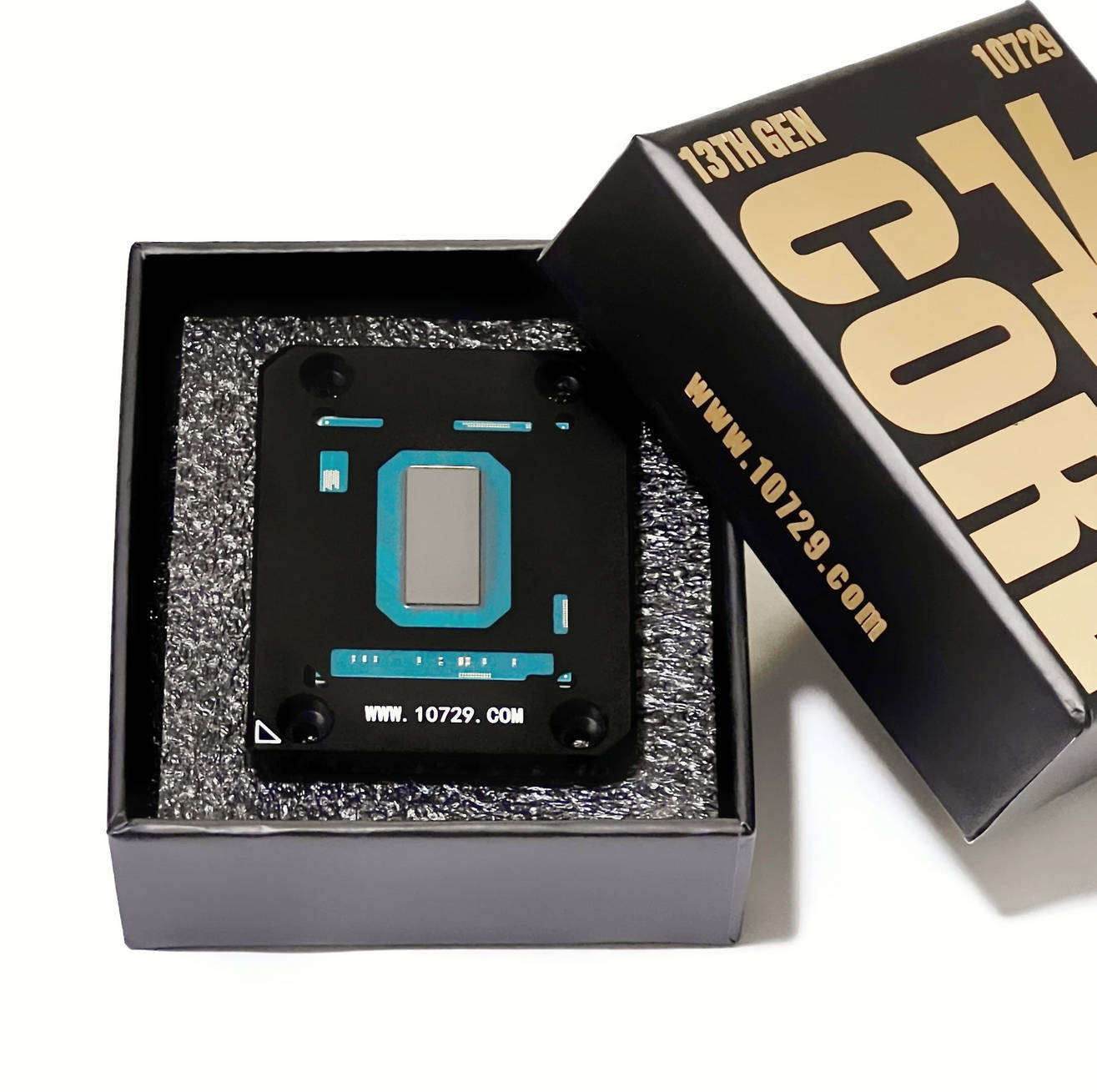
LGA1700 “mutants” are mobile processors adapted for use in desktop motherboards via a special interposer substrate. These models have their own quirks, the most important being an unlocked multiplier and the ability to overclock on any chipset. They’re an ideal choice for experienced users willing to fine‑tune their system to squeeze maximum performance out of minimal budget.
For a detailed guide on choosing, tuning and overclocking LGA1700 “mutants”, see our dedicated article: Complete Guide to Mobile HX Chips in Desktop Boards
12th Gen (Alder Lake)
| Specs | i5-12600HX (ES) | i9-12900HX (ES) |
|---|---|---|
| S-Spec Code | Q016 | Q015 |
| Process Technology | 10 nm | 10 nm |
| Cores / Threads | 4P + 8E / 16 | 8P + 8E / 24 |
| Memory Support (Stock) | DDR4-3200 / DDR5-4800 | DDR4-3200 / DDR5-4800 |
| Integrated Graphics | Intel UHD Graphics (32 EU) | Intel UHD Graphics (32 EU) |
| Turbo Boost Frequency (P cores) | 4000 MHz | 4400 MHz |
| PCIe Lanes | [email protected]+ [email protected] | [email protected]+ [email protected] |
| L3 Cache | 18 MB | 30 MB |
| TDP (Stock) | 55W | 55W |
| Max Temperature | 100°C | 100°C |
| Multiplier | Unlocked | Unlocked |
13th Gen (Raptor Lake)
| Specs | i7-13650HX (ES) | i7-13700HX (ES) | i7-13850HX (ES) | i9-13950HX (ES) | i9-13980HX (ES) |
|---|---|---|---|---|---|
| S-Spec Code | Q1LR | Q1K3 | Q1LQ | Q1LP | Q1LM |
| Process Technology | 10 nm | 10 nm | 10 nm | 10 nm | 10 nm |
| Cores / Threads | 6P + 8E / 20 | 8P + 8E / 24 | 8P + 12E / 28 | 8P + 16E / 32 | 8P + 16E / 32 |
| Memory Support (Stock) | DDR4-3200 / DDR5-4800 | DDR4-3200 / DDR5-4800 | DDR4-3200 / DDR5-4800 | DDR4-3200 / DDR5-4800 | DDR4-3200 / DDR5-4800 |
| Integrated Graphics | Intel UHD Graphics (16 EU) | Intel UHD Graphics (32 EU) | Intel UHD Graphics (32 EU) | Intel UHD Graphics (32 EU) | Intel UHD Graphics (32 EU) |
| Turbo Boost Frequency (P cores) | 4400 MHz | 4600 MHz | 4600 MHz | 4800 MHz | 5100 MHz |
| PCIe Lanes | [email protected]+ [email protected] | [email protected]+ [email protected] | [email protected]+ [email protected] | [email protected]+ [email protected] | [email protected]+ [email protected] |
| L3 Cache | 24 MB | 30 MB | 30 MB | 36 MB | 36 MB |
| TDP (Stock) | 55W | 55W | 55W | 55W | 55W |
| Max Temperature | 100°C | 100°C | 100°C | 100°C | 100°C |
| Multiplier | Unlocked | Unlocked | Unlocked | Unlocked | Unlocked |
Compatibility
Two major chipset families were released for socket LGA1700: the 600‑series (with Alder Lake) and the 700‑series (with Raptor Lake). The platform offers full physical and electrical compatibility within the socket: any retail 12th‑, 13th‑, or 14th‑gen processor will work on any 600‑ or 700‑series chipset motherboard (600‑series boards may require a BIOS update to support 13th‑ and 14th‑gen CPUs).
| Chipset | CPU OC | RAM OC | DMI | PCIe Lanes | SATA | RAID | ECC | Segment |
|---|---|---|---|---|---|---|---|---|
| Z690 | Yes | Yes | x8 | 28 (12 Gen4) | 8 | Yes | No | Enthusiast |
| H670 | No | Yes | x8 | 24 (12 Gen4) | 8 | Yes | No | Mainstream |
| B660 | No | Yes | x4 | 14 (6 Gen4) | 4 | SATA only | No | Mainstream |
| H610 | No | No | x4 | 8 (0 Gen4) | 4 | No | No | Budget |
| Z790 | Yes | Yes | x8 | 28 (20 Gen4) | 8 | Yes | No | Enthusiast |
| H770 | No | Yes | x8 | 24 (16 Gen4) | 8 | Yes | No | Mainstream |
| B760 | No | Yes | x4 | 14 (10 Gen4) | 4 | SATA only | No | Mainstream |
| W680 | Limited | Yes | x8 | 28 (12 Gen4) | 8 | Yes | Yes | Workstation |
| C262 | No | No | x8 | 12 (12 Gen4) | 8 | Yes | Yes | Server |
| C266 | No | No | x8 | 20 (20 Gen4) | 8 | Yes | Yes | Server |
Overclocking and Optimization on LGA1700
On the LGA1700 platform, overclocking options are strictly dictated by the chipset, but enthusiasts have always found loopholes.
1. Official route: classic overclocking
This is the only method Intel officially supports out‑of‑the‑box.
- Processor: K or KF suffix (unlocked multiplier).
- Motherboard: only flagship Z‑series chipsets (Z690 or Z790).
- Result: full control over core multipliers, voltage and power limits.
2. BCLK overclocking: a loophole for “non‑K” CPUs
The most famous way to push a budget Core i5‑12400 up towards flagship‑like clocks.
- Concept: increasing the base clock (beyond the standard 100 MHz), which raises overall CPU frequency.
- Requirement: a motherboard with an external clock generator (usually high‑end B660/B760 or Z‑series models).
- Caveat: Intel is actively blocking this in newer microcodes (BIOS) and in 13th‑ and 14th‑gen CPU revisions. On 12th gen, however, the method still works fine.
3. Power limit unlocking
While multiplier overclocking is locked on B- and H-series boards, power limit tuning remains fully accessible.
- PL1 and PL2: by default, CPUs often drop clocks under sustained load to stay within TDP. Removing or raising these limits lets the processor hold its maximum Turbo Boost frequency indefinitely.
- Use case: a must‑do for mid‑range CPUs, as it delivers a very noticeable performance gain without compromising stability.
4. Undervolting and Tau tuning
With Raptor Lake, classic overclocking is often pointless due to massive heat output. As a result, “reverse overclocking” has become popular.
- Undervolting: lowering voltage while maintaining high clocks. This reduces heat and helps avoid thermal throttling.
- Tau: controlling how long the processor is allowed to sustain peak power levels.
5. Historical artifact: AVX‑512
AVX‑512 instructions can dramatically accelerate certain compute‑heavy workloads.
- How it used to work: on early 12th‑gen Alder Lake batches, these instructions could be enabled after disabling E‑cores.
- Status: Intel is now physically fusing this capability off in new dies. Today, AVX‑512 on LGA1700 is only available to owners of early CPU revisions and early BIOS versions.
Conclusion and Legacy
LGA1700 became Intel’s “big comeback” platform and a highly influential socket that moved the desktop market from the first steps in hybrid architecture to pushing mainstream CPUs up to 6.0 GHz.
Over its lifecycle, the platform:
- Brought the P‑core / E‑core hybrid layout to the desktop for the first time, changing the traditional approach to multitasking.
- Served as a bridge between the DDR4 and DDR5 eras, and opened the door to PCIe 5.0.
- Sparked an entire culture of overclocking‑oriented mods — from must‑have contact frames to combat IHS bending to a resurgence of interest in undervolting.
- Kick‑started the mass market for “mutants” based on mobile Alder and Raptor Lake dies, which became a budget hit among enthusiasts.
The legacy of LGA1700 is a combination of impressive performance and serious technical challenges. Despite the arrival of newer platforms, this socket will remain relevant for many years thanks to its mature ecosystem, vast base of capable hardware and huge potential on the second‑hand market. For the enthusiast community, LGA1700 will be remembered as the era when CPUs once again became hot and tricky to tune — but in return delivered a massive performance leap that breathed new life into the DIY segment.
Comparing with AMD? Its rivals of the same years, Ryzen 7000 and the first Ryzen 9000 chips, run on Socket AM5 and are all in our AM5 CPU list.

Written by
Senior Hardware Specialist proving you don't need top-tier gear to game. Expert in smart upgrades and budget-friendly PC restoration.